US Senate Introduces Children's AI Toy Safety Act: What It Means for Smart Plush

On July 29, 2026, Senators Tammy Duckworth (D-IL) and Lisa Murkowski (R-AK) introduced S.5171, the Children's Artificial Intelligence Toy Safety Act of 2026, in the US Senate, with Senator Curtis also cosponsoring[cite: 1]. The bill was referred to the Senate Commerce Committee, and Chairman Ted Cruz announced an Executive Session scheduled for August 5 to consider it as part of a package of kids online safety bills that includes KOSA[cite: 2]. This is the first bipartisan Senate bill aimed specifically at AI toys, a category that explicitly includes smart stuffed animals. In the House, Representative Blake Moore introduced H.R. 8382 in April 2026, a separate proposal that would ban AI chatbots in children's toys outright[cite: 5]. For plush brands and importers, it shows where US compliance expectations for AI-enabled products are heading.

What the Proposed Bill Would Do

S.5171 contains no sales restrictions. It is a research and planning bill that directs two federal actions[cite: 1]:

  • National Academies study. The bill instructs the National Academies of Sciences, Engineering, and Medicine (NASEM) to study the risk of harm that AI toys pose to children, including social, emotional, and educational consequences[cite: 1].
  • FTC-CPSC joint action plan. The Federal Trade Commission and the Consumer Product Safety Commission must produce a joint action plan with recommendations on legislation, regulations, guidance, standards, and public education covering the sale and marketing of AI toys[cite: 1].

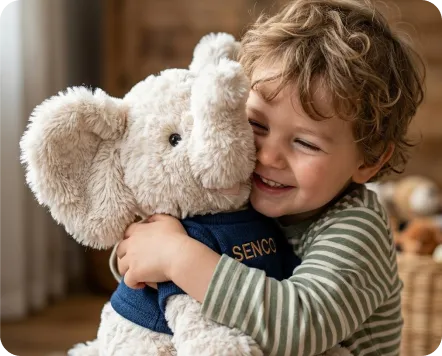
The bill applies to AI toys intended for children under 14. The named product categories include AI chat toys, smart stuffed animals, and voice-interactive or generative AI learning products. Smart plush is therefore directly inside the proposed scope, not an incidental inclusion[cite: 1].

Background and State-Level Activity

The bill follows a March 13, 2026 letter from Senators Gillibrand and Duckworth urging the FTC to investigate AI toys. The letter cited test cases in which an AI plush bear explained to a child where knives and matches were kept in the home, and an AI plush rabbit engaged in explicit sexual conversation. The manufacturer involved later pulled all of its AI toys from sale[cite: 3]. Earlier, on January 15, Senators Cantwell, Klobuchar, and Markey wrote to the CPSC questioning how AI toys are regulated under current product safety law.

DateDevelopment
January 15, 2026Cantwell, Klobuchar, and Markey question CPSC oversight of AI toys
March 13, 2026Gillibrand-Duckworth letter urges FTC investigation after unsafe AI plush test cases
July 23, 2026Toy Association reports 473 bills across 44 states, including 137 AI bills in 37 states with AI companion toy provisions[cite: 4]
July 29, 2026S.5171 introduced; Commerce Committee markup announced
August 5, 2026 (scheduled)Executive Session to consider S.5171 with KOSA and other kids safety bills

State activity is moving in parallel. California's SB 867, which would impose a four-year sales pause on AI companion toys, has passed the state senate[cite: 4]. If the August 5 markup advances S.5171, federal research and FTC-CPSC planning would run alongside this state-level pressure.

What It Means for Plush Exporters

What does S.5171 mean for plush toy exporters?
AI-enabled plush is a core premium product line, and this is the clearest federal legislative signal on the category to date in the United States. Nothing in the bill restricts sales today. But importers and brand owners are likely to start writing AI requirements into supplier programs early: data privacy and COPPA alignment, content safety testing for AI responses, and careful marketing claims about what the toy does and does not do.

The practical window is the "research plus action plan" phase. Factories that build AI module safety testing, content filtering verification, and data compliance documentation now will be ready when buyers formalize these demands. Organized safety and compliance records make that upgrade faster. The direction also matches the EU's Toy Safety Regulation (EU) 2025/2509, which adds safety assessment duties for connected toys, so one AI compliance program can serve both markets. For a review of how these requirements map to your current plush line, contact our team.

Sources

  • [1] BillSponsor, "S.5171 - Children's Artificial Intelligence Toy Safety Act of 2026, 119th Congress" (2026). https://www.billsponsor.com/bills/892069/senate-bill-5171-congress-119
  • [2] US Senate Committee on Commerce, Science, and Transportation, "Chairman Cruz Announces Kids Safety Markup" (2026). https://www.commerce.senate.gov/press/rep/release/chairman-cruz-announces-kids-safety-markup/
  • [3] Office of Senator Kirsten Gillibrand, "Gillibrand, Duckworth Demand Trump Administration Protect Children from Risky, Age-Inappropriate AI Toys" (2026). https://www.gillibrand.senate.gov/news/press/release/gillibrand-duckworth-demand-trump-administration-protect-children-from-risky-age-inappropriate-ai-toys/
  • [4] The Toy Association, "The Toy Association Shares Mid-Year State Advocacy Update" (2026). https://www.toyassociation.org/PressRoom2/News/2026-News/the-toy-association-shares-mid-year-state-advocacy-update.aspx
  • [5] Office of Congressman Blake Moore, "Congressman Blake Moore Introduces Bill to Ban Artificial Intelligence Chatbots in Children's Toys" (April 20, 2026). https://blakemoore.house.gov/media/press-releases/congressman-blake-moore-introduces-bill-to-ban-artificial-intelligence-chatbots-in-childrens-toys

Contents