Labubu's 2025 Sales Explosion — What It Means for the Custom Plush Market
In 2025, a small furry toy with pointed ears and nine teeth became one of the biggest commercial stories in the global toy industry. Labubu — the character created by Hong Kong artist Kasing Lung and licensed exclusively to Pop Mart — sold over 100 million units worldwide last year. That number, disclosed by Pop Mart founder Wang Ning at the company's annual meeting, made Labubu the clearest proof yet that collectible plush toys have moved far beyond the children's market.
For brands, IP owners, and businesses commissioning custom plush toys, the Labubu phenomenon carries practical lessons — about what drives demand, what manufacturers face when viral IP hits, and where the market is heading in 2026.
The Numbers Behind the Phenomenon
Pop Mart's H1 2025 results showed revenue up 204% year-on-year, with net profit rising 362%. The Monsters IP family — led by Labubu — generated RMB 4.81 billion (approximately $670 million) in the first half of 2025 alone, a 668% increase over H1 2024. That figure represented 34.7% of Pop Mart's total revenue for the period.
| Metric | Figure | Period |
|---|---|---|
| Labubu units sold globally | 100 million+ | Full year 2025 |
| "The Monsters" series revenue | ~$670M (RMB 4.81B) | H1 2025 |
| Pop Mart overall revenue growth | +204% YoY | H1 2025 |
| Pop Mart net profit growth | +362% YoY | H1 2025 |
| Plush toy sales growth (Pop Mart) | +1,200% | H1 2025 |
| Pop Mart plush production (Aug 2025) | 30M+ units/month | August 2025 |
| Pop Mart overseas revenue growth | +475% YoY | Q1 2025 |
| Pop Mart peak market cap | ~$44B USD | Mid-2025 |
How Labubu Got Here
Kasing Lung created the Labubu character in 2015 as part of an illustrated book series called The Monsters. Pop Mart signed an exclusive global licensing deal with Lung in 2019 and began producing plush and vinyl versions of the character. For several years, Labubu stayed a niche collector item.
The inflection point came in April 2024, when Lisa from BLACKPINK posted about Labubu on Instagram. The viral moment triggered immediate sellouts across Asia, Europe, and North America. By 2025, celebrities including Rihanna, Kim Kardashian, David Beckham, and Dua Lipa had been photographed with Labubu — often hanging from luxury bags as a fashion accessory. This celebrity exposure turned a collectible toy into a status symbol.
Pop Mart's blind-box model amplified demand. Buyers don't know exactly which variant they're getting until the box is opened — a mechanic that drives repeat purchases and secondary market activity. Rare variants were selling at auction for over $100,000 by mid-2025.
The Supply Chain Under Pressure
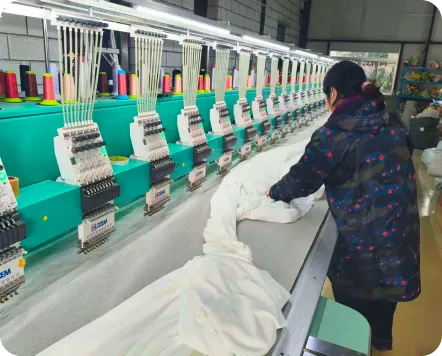
The speed of Labubu's growth created serious production challenges. Pop Mart's plush production surged tenfold in H1 2025, reaching over 30 million units per month by August. The company responded by building what it describes as an agile, adaptable supply chain — scaling factories, adjusting forecasting models, and managing quality control across a product range where material types, finishes, and packaging each carry their own lead time constraints.
The counterfeit problem grew in parallel. "Lafufu" — the widespread nickname for knockoff Labubus — became a significant market in itself, with factories mainly in Guangdong and Hebei provinces producing unauthorized versions. Pop Mart responded with trademark filings, design rights enforcement, customs seizures, and product authentication measures including QR codes, serial numbers, and hologram packaging. In July 2025, the company filed a lawsuit in California against a 7-Eleven-branded knockoff product.
This counterfeit pressure underscores a point that matters for any brand commissioning IP-based plush: production quality and authenticity controls are not just a legal concern — they directly affect brand trust and product value in the market.
Where Things Stand in 2026
After a record-breaking 2025, Pop Mart's trajectory shifted in early 2026. The company's full-year 2025 results, released in March 2026, showed The Monsters family accounting for 38% of total annual revenue — but H2 2025 performance failed to meet the high expectations set by the earlier boom. Following the results, Pop Mart's share price dropped more than 20% in a single session.
Resale prices for Labubu have cooled significantly from their peaks. Pop Mart founder Wang Ning acknowledged the moderation: "We won't pursue overly aggressive growth that boosts revenue at the expense of profitability."
That said, Pop Mart is investing in the IP's long-term legs. In early 2026, the company announced a feature film collaboration with Sony Pictures, following the successful brand-to-film playbook of LEGO and Barbie. The project was unveiled during a global exhibition marking Labubu's 10th anniversary.
What This Means for Brands Commissioning Custom Plush
The Labubu story is not just about one toy company. It's a case study in how IP, manufacturing, and retail mechanics interact at scale. A few things stand out for brands thinking about custom plush products:
- Character accuracy matters more than ever. Collectors and fans are highly sensitive to how well a physical product matches its source IP. Poor shape reproduction or inconsistent finishing across bulk production destroys perceived value — and brand trust.
- The adult collectible segment is real and growing. Over 60% of Labubu buyers are female and aged 25–34. Brands positioning plush products as collectibles, gift items, or lifestyle accessories — rather than children's toys — are tapping a genuinely large market.
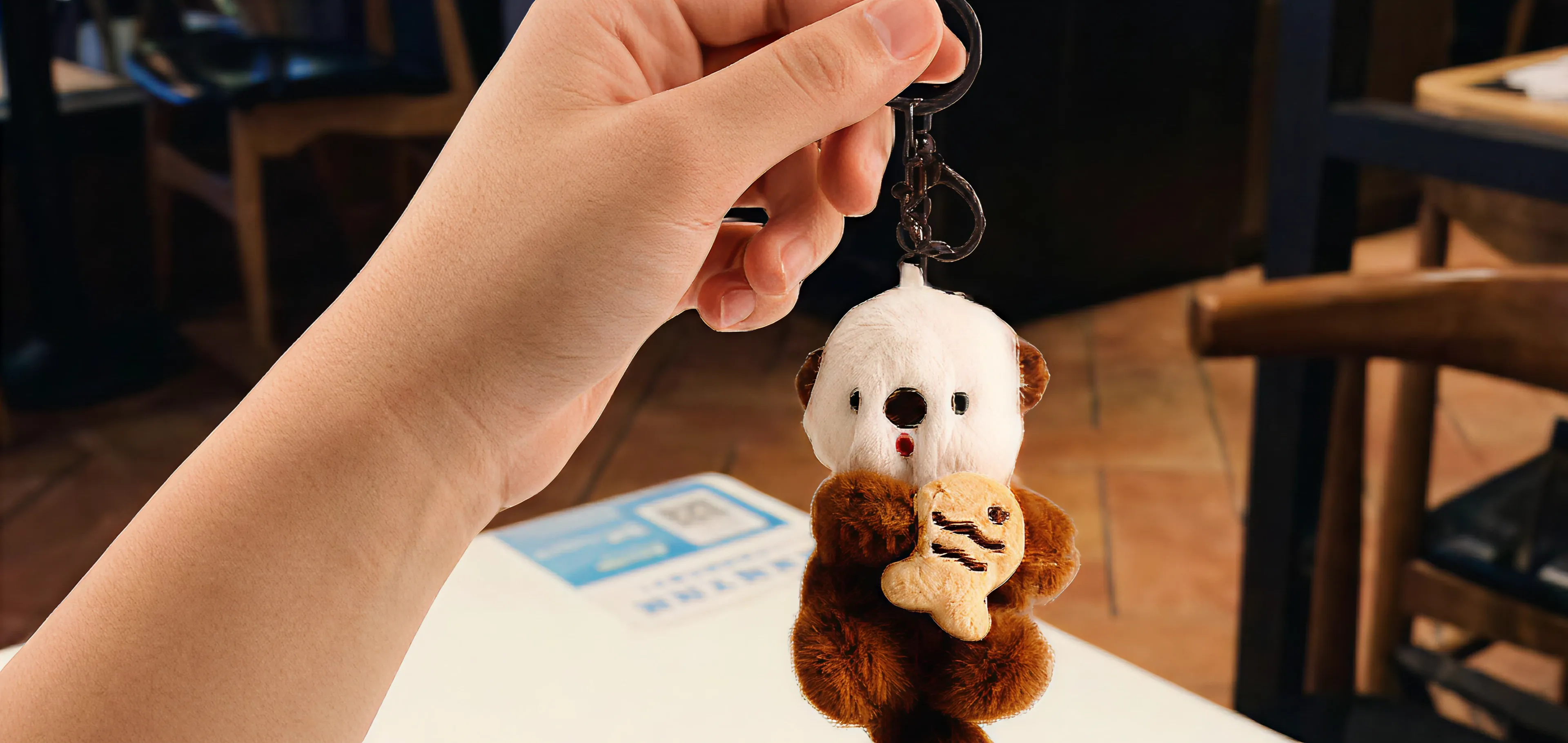
- Plush keychains and hybrid formats are driving new demand. Labubu's vinyl-plush keychain format was a key driver of its celebrity adoption. Small-format custom plush keychains are a cost-effective entry point for brands wanting to explore this category.
- Supply chain reliability is a competitive advantage. When Labubu demand spiked, manufacturers that could scale quickly while maintaining quality held a clear edge. For custom projects, a factory with stable quality control and accurate sample-to-bulk reproduction is worth more than one with the lowest unit price.
Sources
Global Times — "LABUBU frenzy continues, with global sales topping 100 million units in 2025" (Feb 8, 2026)
https://www.globaltimes.cn/page/202602/1354999.shtml
Robb Report — "Pop Mart's Labubu Doll Sales Surge, First Half Revenue Reaches ~$2 Billion" (Aug 19, 2025)
https://robbreport.com/style/accessories/pop-mart-labubu-first-half-revenue-1236989019/
Supply Chain Outlook — "The Labubu Effect" (Oct 7, 2025)
https://www.supplychain-outlook.com/retail-consumer-goods/the-labubu-effect
Procurement Magazine — "Pop Mart: The Rise and Fall of the Labubu Supply Chain" (Mar 30, 2026)
https://procurementmag.com/news/pop-mart-rise-fall-labubu-supply-chain
China Labor Watch — "Labubu, Unboxed: the labor behind the global toy phenomenon" (Feb 20, 2026)
https://chinalaborwatch.org/labubu-unboxed-the-labor-behind-the-global-toy-phenomenon/
Mathys & Squire LLP — "Labubu and the Rise of Pop Mart: From Toy to IP Powerhouse" (Oct 22, 2025)
https://www.mathys-squire.com/insights-and-events/news/labubu-and-the-rise-of-pop-mart-from-toy-to-ip-powerhouse/
Demand Sage — "Labubu Statistics (2026) – Global Popularity & Sales" (Apr 7, 2026)
https://www.demandsage.com/labubu-statistics/