Best Fabrics and Stuffing for Custom Plush Animals: A Buyer's Materials Guide
A plush animal is two materials working together: the outer fabric you see and touch, and the fill inside that gives it shape and weight. Get both right and the toy looks like the design and feels good in the hand. Get either one wrong and you end up with a sample that sheds, sits lumpy, loses its shape after a wash, or just doesn't feel like what you pictured. This guide covers how we pick both for custom animals, with the specifics that change the result.
We'll go through the common plush fabrics and where each one fits, how to read a fabric spec so a swatch doesn't surprise you in production, the stuffing options and what each does to softness and weight, and the safety points that decide some material choices for you. Whether you're building a baby line, a mass-retail run, or a realistic collectible, the goal is the same: a material spec that holds from the first sample to the last carton.
What are custom plush animals made of? Most are built from a knit pile fabric on the outside and polyester fiberfill on the inside. The outer fabric is usually minky, short plush (velboa), faux fur, or fleece, chosen for softness, pile length, and how cleanly it takes embroidery. The standard fill is polyester fiberfill (PP cotton), light and springy, with options like recycled fiber, cotton, foam, or weighted pellets added for specific looks, weights, or eco goals. The right combination depends on the animal's size, who it's for, and the market it ships to.
Plush Fabric Types and Where Each One Fits
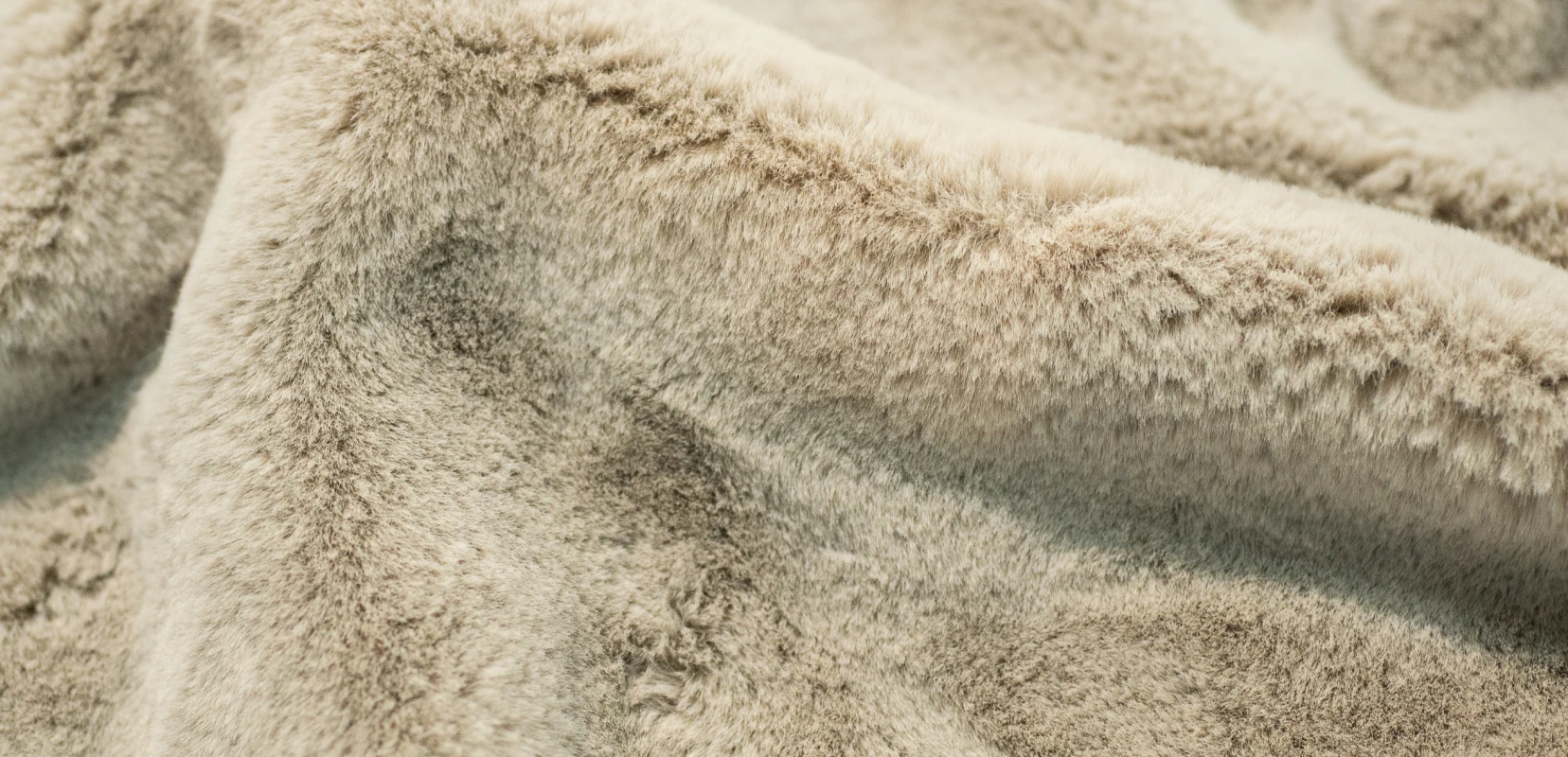
"Plush" covers a family of knit pile fabrics, fibers standing up from a backing like short fur. The name on a swatch (minky, velboa, faux fur) tells you the pile height, the backing, and how it will sew. Softness is only one part of what the label signals. Most plush animals use polyester pile fabric because it's soft, takes dye in stable colors, and holds up to play and washing. Here's how the common ones compare.
| Fabric | Pile height | Feel and look | Best for | Watch for |
|---|---|---|---|---|
| Minky | ~1.5–5 mm | Silky, ultra-soft, slight sheen | Baby toys, cuddle bodies, bellies, faces | Stretches; align nap; attracts lint |
| Short plush / velboa | ~1.5–3 mm | Smooth, low-shed, holds shape | Mass-retail bodies, faces, clean embroidery and logos | Less plush feel than minky |
| Long plush | ~6–25 mm | Fluffy, premium, photogenic | Cozy bodies, fuller animals | Bulks at curves; more lint; slower to cut |
| Faux fur | ~20–50 mm | Realistic directional fur | Lifelike animals, manes, tails, collectibles | Sheds; no stretch; needs directional cutting |
| Sherpa / teddy | Curly loop | Wool-like, warm, fuzzy | Teddy bears, winter themes | Harder to embroider crisply |
| Fleece | Brushed, low | Cozy, matte, budget | Simple shapes, comfort plush, accents | Pills if low grade; use anti-pill |
| Velour / velvet | Smooth cut pile | Elegant, clean surface | Dolls, clean-face characters, gift lines | Shows nap marks; less washable |
| Cotton | Woven, flat | Natural, breathable, matte | Eco lines, doll bodies, printed detail | Pills and fades faster; no pile feel |
For custom animals, minky and short plush do most of the work. Minky gives the softest hand and reads warm on camera, which is why it's the default for baby items and the bellies and cheeks of character animals. Short plush (velboa) is the steadier, lower-shed option that keeps faces and logos crisp and holds a clean silhouette on the shelf, so it's the common body fabric for mass retail. Faux fur is what you reach for when an animal needs to look real, a fox tail or a lion's mane, accepting that it sheds and takes more care to sew. Across our custom plush animals, the fabric is matched to the character first and the budget second.
How to Read a Fabric Spec: Pile, GSM, and Backing
Three numbers decide how a plush fabric behaves, and they're worth knowing before you approve a swatch.
- Pile height (mm): how long the fibers are. Short pile (1–3 mm) keeps embroidery sharp and suits faces and small parts; mid pile (4–8 mm) gives soft bodies; long pile (10 mm and up) creates a fluffy or fur-like look but adds visual bulk and lint.
- GSM (grams per square meter): the fabric weight and density. Higher GSM means a denser pile that hides the backing and seams and feels more substantial. Most toy plush lands roughly between 180 and 500 GSM depending on pile and grade.
- Backing: the knit base the pile sits on, usually a tricot or warp knit. A stable backing resists seam tearing and "grin," where stuffing shows through a stretched seam, which matters most on densely stuffed animals.
Two practical effects come out of these. Longer pile needs slightly smaller pattern pieces so the toy doesn't look bloated once the fibers add bulk, and softer, stretchier fabrics like minky need a wider seam allowance on curves to keep the shape clean. We lock pile height, GSM, and backing in the spec so a reorder months later feels the same in the hand, color and texture both. This is the same discipline behind the fabric map we build during artwork and spec prep: a fabric assigned to each part of the body, with its numbers attached.
Matching Fabric to the Animal and the Market
The best fabric depends on who holds the toy and where it sells. A baby gift, a shelf product, and a collector's piece pull in different directions.
- Baby and toddler: short-pile minky or velboa (1–3 mm) in calm colors, fully embroidered faces, and low-shed finishes. Short fibers near the mouth and strong seams matter more than dramatic fluff.
- Mass retail: short plush bodies for shape stability and clean photos, in colorfast core palettes that reduce returns. Staying stable across large dye lots is the priority.
- Realistic or collectible: mid-to-long faux fur for depth and species detail, with directional cutting and post-sew grooming planned in. Mascots and lifelike animals live here.
You rarely use one fabric for the whole animal. Fabric zoning is the standard move: a short, clean fabric for the face and any logo so embroidery stays sharp, and a softer or fluffier fabric for the body to hit the feel you want. A classic combination is a short plush body with a minky belly and cheeks, which gets you cost control and a soft touch where it's noticed. The same logic puts faux fur only on a tail or mane while the body stays an easier-to-sew plush. Decoration follows the fabric too: short and smooth surfaces print and embroider cleanly, while long pile hides fine lines unless you trim around them or switch to an appliqué.
Stuffing for Stuffed Animals: The Inside Half
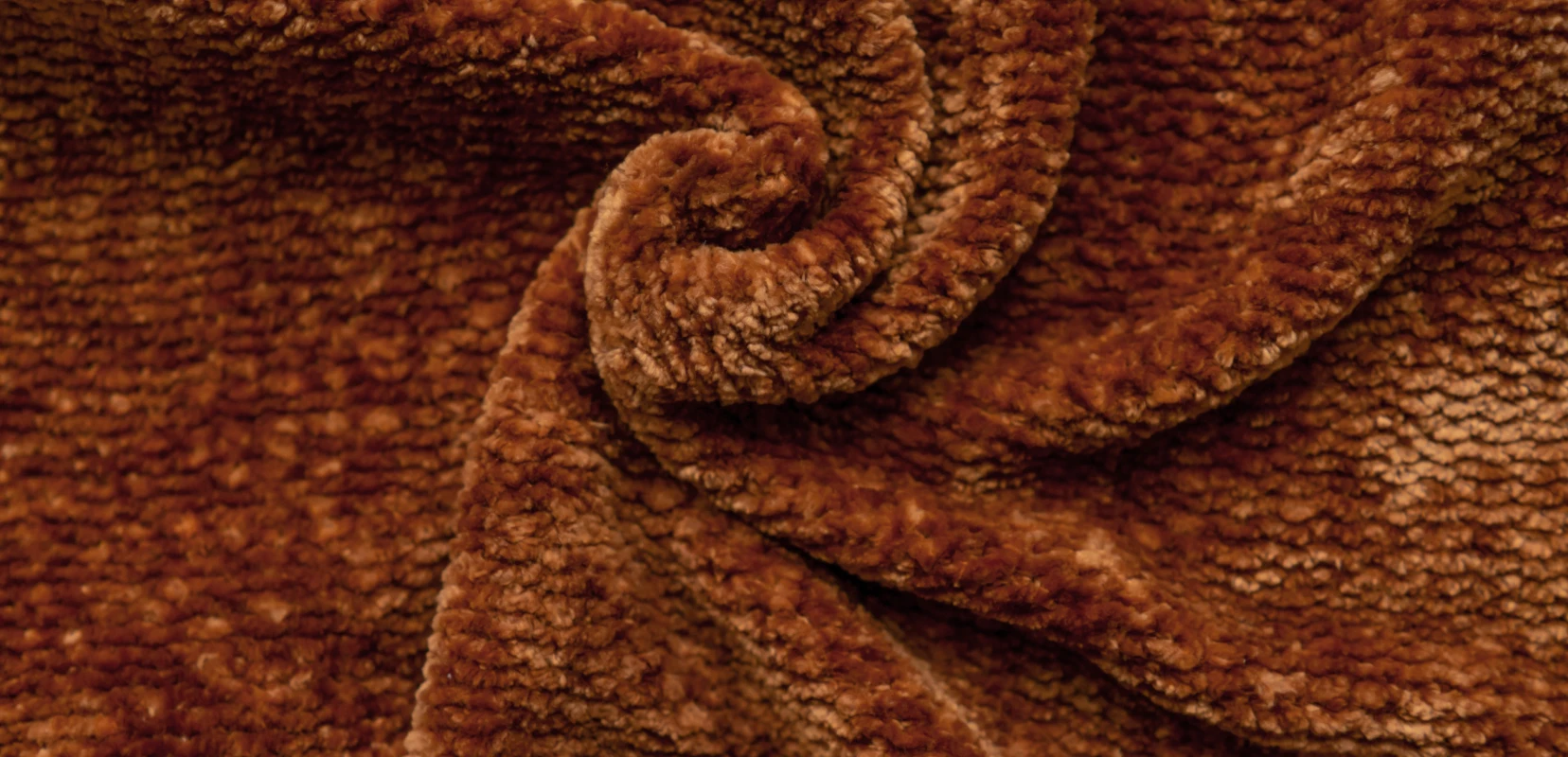
What is the stuffing in stuffed animals called? The general term is filling or stuffing, and the most common type is polyester fiberfill, often called PP cotton or polyfill. It's a light, springy synthetic fiber that gives a soft, even loft, washes well, and is hypoallergenic, which is why it's the base fill in most plush animals made for retail. Other materials get added or swapped in for weight, firmness, a natural story, or eco goals. Here's how the main options compare.
| Fill | Feel | Best for | Notes |
|---|---|---|---|
| Polyester fiberfill (PP cotton) | Soft, light, springy | Most plush animals, the standard base | Washable, hypoallergenic, affordable; can compress over time |
| Recycled PET fiber (RPET) | Same as virgin fiberfill | Eco-positioned lines | Made from recycled bottles; performs like polyester, still synthetic |
| Cotton / organic cotton | Denser, firmer | Doll bodies, natural and baby lines | Packs tight; costs more; can clump and add weight |
| Wool | Dense, firm, natural | Heritage and decorative pieces | Possible allergen; less suited to washable kids' toys |
| Kapok / bamboo | Light, silky, natural | Eco and premium baby lines | Biodegradable; bamboo is naturally antibacterial |
| Shredded foam / memory foam | Soft but holds shape | Pillows, large plush, structured parts | Resilient and bouncy; adds bulk and structure |
| Plastic / glass pellets | Heavy, shifting | Weighted plush, parts that sit upright | Choking risk; sealed in inner chambers, not for under-3 |
Polyester fiberfill is the default for good reasons: it's consistent batch to batch, holds loft, and passes the major safety standards, which keeps it safe and affordable at scale. For an eco line, recycled PET fiber drops in with the same feel and a better story. Natural fills like cotton, kapok, and bamboo suit brands that want a fully natural product, with the trade-off of higher cost and, for cotton, a tendency to pack down and clump. We keep the common fills on hand and list them on our materials page, and we'll recommend a base fill plus any add-ons based on the animal and the market.
Soft, Firm, or Weighted: How Fill Changes the Feel
Two animals stuffed with the same fiberfill can feel completely different depending on how much goes in and where. Fill is as much a technique as a material.
Density sets the basic feel. Pack a body firm and it holds a defined shape and stands better; leave it softer and it squishes and flops. Overstuff and the toy turns stiff, rounds out past its pattern, and can strain seams; understuff and it sags and looks lumpy. We stuff to a target loft and check the shape against the approved sample, because the same fill at the wrong density changes the whole silhouette.
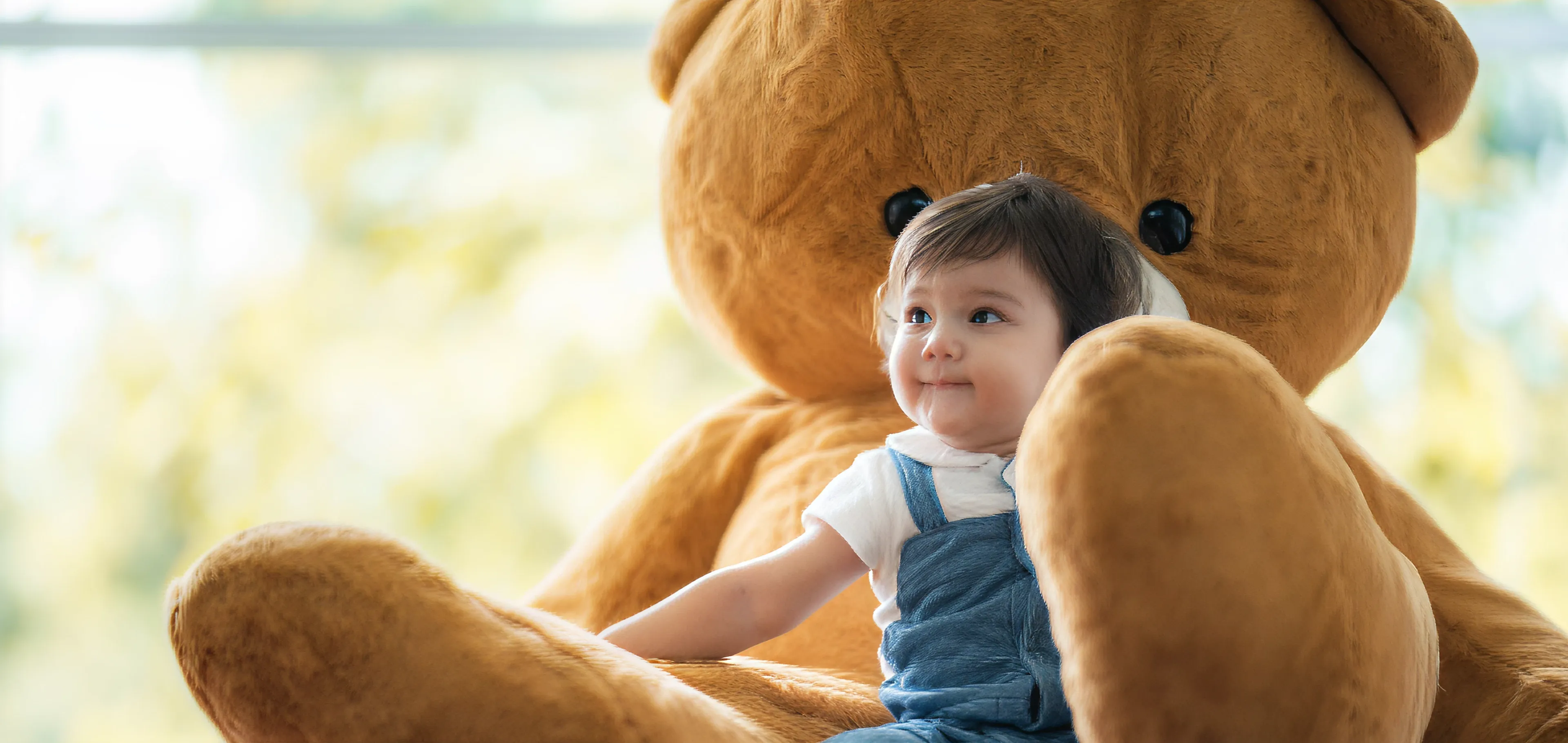
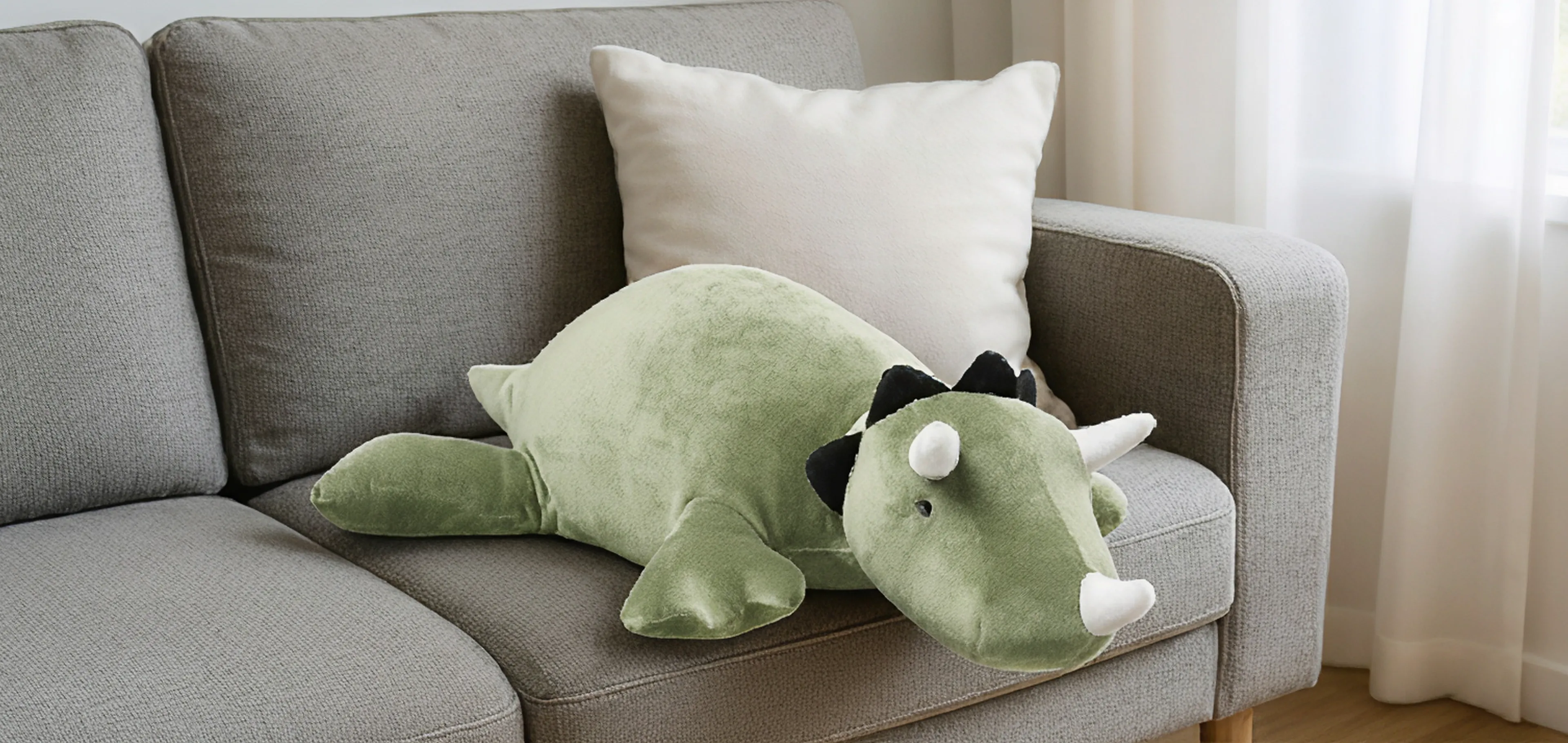
Placement does the rest. Heads, muzzles, and limbs often get stuffed firmer than a soft belly so features stay defined, and a standing or sitting animal usually carries weighted pellets low in the base or feet so it sits upright on its own. For a denser, more structured body, like a firm doll or a poseable figure, cotton, wool, or a foam core packs tighter than fiberfill alone. Weighted plush is a category of its own: the pellets that give it that calming heft sit inside sewn inner chambers so the weight stays put and contained. Larger pieces lean on bulk and structure too, which is why a giant plush or a plush pillow often uses high-loft fiberfill or foam to hold its form without getting heavy.
Safety Notes That Decide Some Material Choices
A few safety rules aren't optional, and they settle certain fabric and fill questions before preference comes into it.
The biggest one is weighted fills and small parts for young children. Beads and pellets are a choking hazard, so for any toy that can reach a child under three, they have to be sealed inside stitched inner chambers, and loose beads are kept out of that age group entirely. The same thinking favors embroidered eyes and noses over glue-on plastic parts for younger grades, since embroidery can't detach. On the fabric side, low-shed, low-lint plush is safer near a baby's mouth than long shedding fibers, which is part of why short minky and velboa lead in baby lines.
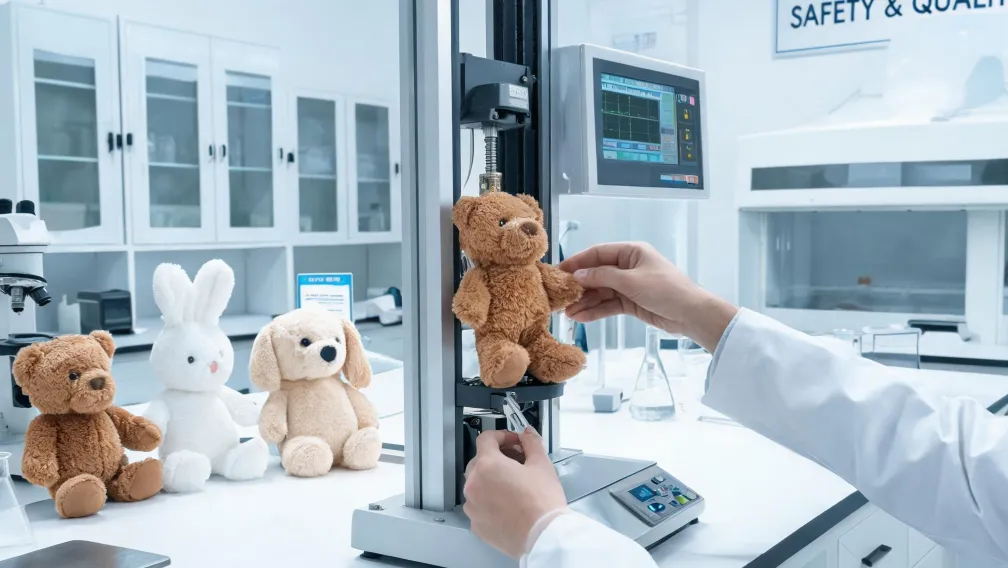
Materials also carry the chemical and flammability side of compliance. Fabrics, fills, dyes, and any "natural" claim still get tested to the standard for your market, EN 71 for the EU, ASTM F963 and CPSIA for the US, and others by region, and testing runs on the actual production materials that ship. Choosing fabrics and fills with known compliant profiles up front avoids a failed test after a run is made. Our overview of safety and compliance and our guide to plush toy safety standards cover how this is handled by market.
Building Your Plush Animal's Materials Spec
When you brief a custom animal, the cleanest spec answers a few material questions up front. It's the same list we work through before sampling, and having it set gets the first sample closer.
- Outer fabric, mapped by part: which fabric for the body, the face, the inner ears, the tail, with pile height and GSM where you have a preference
- Feel target: ultra-soft and squishy, or firm and shape-holding, since that drives both fabric and fill
- Fill type: standard fiberfill, recycled PET, a natural fiber, or a weighted option, plus any firmer core for parts that need structure
- Weight and pose: whether the animal should sit or stand on its own, which calls for weighted pellets in the base
- Market and age grade: the destination and target age, which sets the safety bar for both fabric and fill
- Decoration: embroidery, print, or appliqué, so the face fabric is chosen to carry it cleanly
If you only have some of this, that's fine. Tell us the animal, who it's for, and the feel you want, and we'll match fabric and fill, send swatches to confirm, and lock the spec so every unit matches the sample you approve. We do this constantly for original characters that arrive as a single drawing.
Get a Materials Recommendation for Your Plush
Send us your character or design and we'll put together a materials plan: the fabric for each part, the fill that gives the feel you're after, and the safe options for your market. As a factory-direct custom plush manufacturer, we prototype with real swatches before you commit and lock the specs so your plush feels the same from sample to container. Tell us about your project and we'll recommend the right fabric and stuffing for your animal and target market.
FAQ
There's no single best fabric; it depends on the animal and the market. Minky gives the softest, most cuddly hand and suits baby toys and character bellies. Short plush (velboa) is the steady, low-shed choice for mass-retail bodies and clean embroidery. Faux fur creates realistic fur for lifelike animals and collectibles, with more shedding and care. Most plush animals use a mix: a clean short fabric for the face and a softer or fluffier one for the body.
The general term is filling or stuffing. The most common type is polyester fiberfill, also called PP cotton or polyfill, a light, springy synthetic fiber. It dominates because it's soft, washable, hypoallergenic, consistent batch to batch, and affordable at scale. Factories often blend or swap in other fills, like recycled PET fiber, cotton, foam, or weighted pellets, for specific looks and weights.
For most plush animals, polyester fiberfill is the best all-round fill: soft, washable, hypoallergenic, and compliant with the major toy safety standards. Recycled PET fiber is the best choice for an eco line, with the same feel. Cotton or wool suits firm-bodied dolls and natural products. Weighted pellets are best for toys that need to sit upright or have a calming heft, used only in sealed inner chambers and not for children under three.
Minky has a longer, silkier pile and the softest hand, which makes it the pick for baby toys and the soft zones of an animal, though it stretches and sheds a little more. Velboa (short plush) has a shorter pile, sheds less, holds its shape, and takes embroidery crisply, which makes it the workhorse for mass-retail bodies, faces, and logos. Many animals use both: velboa body, minky belly and cheeks.
Firmness comes from both the fill and how densely it's packed. For a soft, squishy animal, use polyester fiberfill at a lighter loft. For a firm, shape-holding body, pack the fiberfill denser or use cotton, wool, or a foam core, which pack tighter. Stuffing parts at different densities, firmer heads and limbs with a softer belly, is how a plush keeps defined features and a cuddly feel at once.
They can be, with the right construction and age grading. The weighting beads or pellets must be sealed inside sewn inner chambers so they can't escape, and loose beads aren't used in toys for children under three because of the choking risk. Weighted plush is generally made for older children and adults for the calming deep-pressure feel, and like all our toys it's tested to the safety standard for its market.