Custom Plush Toy Cost: A Full Price Breakdown for B2B Buyers
One of the first questions almost every buyer asks us is simple to say and hard to answer in one line: how much does a custom plush toy cost? The honest reply from the factory side is that there is no single number, because a plush quote is built from a stack of separate costs that move independently. A 10 cm keychain and a 60 cm display piece can both be "a custom plush toy," yet sit at opposite ends of the price scale.
This breakdown walks through every line that goes into a real quote, in the order it actually affects your invoice. The goal is not to hand you a price list — prices shift with materials, order size, and specification — but to let you read a quote, understand why a number is what it is, and know which levers actually lower it. Where we cite figures, treat them as typical industry ranges to budget against, not as fixed pricing; your real number comes from a quote against your exact spec.
What a Custom Plush Toy Quote Is Actually Made Of
A custom plush quote separates into one-time costs and per-unit costs, and confusing the two is where most budgeting goes wrong. One-time costs are paid once per design regardless of how many units you order: the sample or prototype fee, pattern engineering, and embroidery digitizing. Per-unit costs repeat on every piece: materials, labor, accessories, packaging, and freight. Then there are conditional line items that only appear if your project needs them — third-party safety testing, retail packaging, special fills.
The reason this structure matters is that one-time costs get spread across your order. Pay a $200 sample fee on a 200-piece run and it adds a dollar to each unit; spread it across 5,000 pieces and it disappears into rounding. So the same design genuinely costs more per unit in small batches, not because anyone is penalizing you, but because the fixed setup has fewer units to hide behind. Understanding that single principle explains most of what feels confusing about plush pricing.
It also explains why factories quote in tiers rather than a flat per-piece rate. A typical quote shows several quantity breaks — for example a price at 500, a lower price at 1,000, and a lower one again at 3,000 and 5,000 — with the curve flattening as volume rises. The steepest savings almost always sit between the smallest run and the first serious production tier, because that is where the fixed setup is being divided among meaningfully more units. Past a certain point the unit price barely moves, since most of what is left is material and labor that scale with every piece. Knowing roughly where that flattening happens for your design helps you decide whether stretching your order to the next tier is worth it or whether you are already past the point of useful savings.
Sample and Prototype Fees: The First Cost You'll See
Before any bulk pricing is final, you pay for a sample. Across the industry, a custom plush prototype typically runs in the range of $100 to $300 per design, depending on complexity and how many revision rounds you need. That fee covers real engineering work: turning your flat artwork into a 3D pattern, sourcing the right fabrics in small quantities, programming the embroidery stitch map, and the hand-sewing of a physical sample your team can hold and approve.
The detail that saves buyers money: a reputable factory refunds the sample fee by deducting it from your final invoice once your order reaches the agreed minimum. So for a buyer who proceeds to bulk production, the prototype is effectively an advance payment, not a sunk cost. Where it does become a real expense is when you sample several competing factories at once, or run many revision cycles — each round of changes is more pattern and sewing time. Coming into sampling with clean, clear reference art (front, back, and side views, plus Pantone colors) is the single cheapest way to keep this stage short. If you are still choosing a partner, our breakdown of how to choose a plush toy manufacturer covers what to check before you pay any sample fee.
How Size and Fabric Set Your Baseline Unit Price
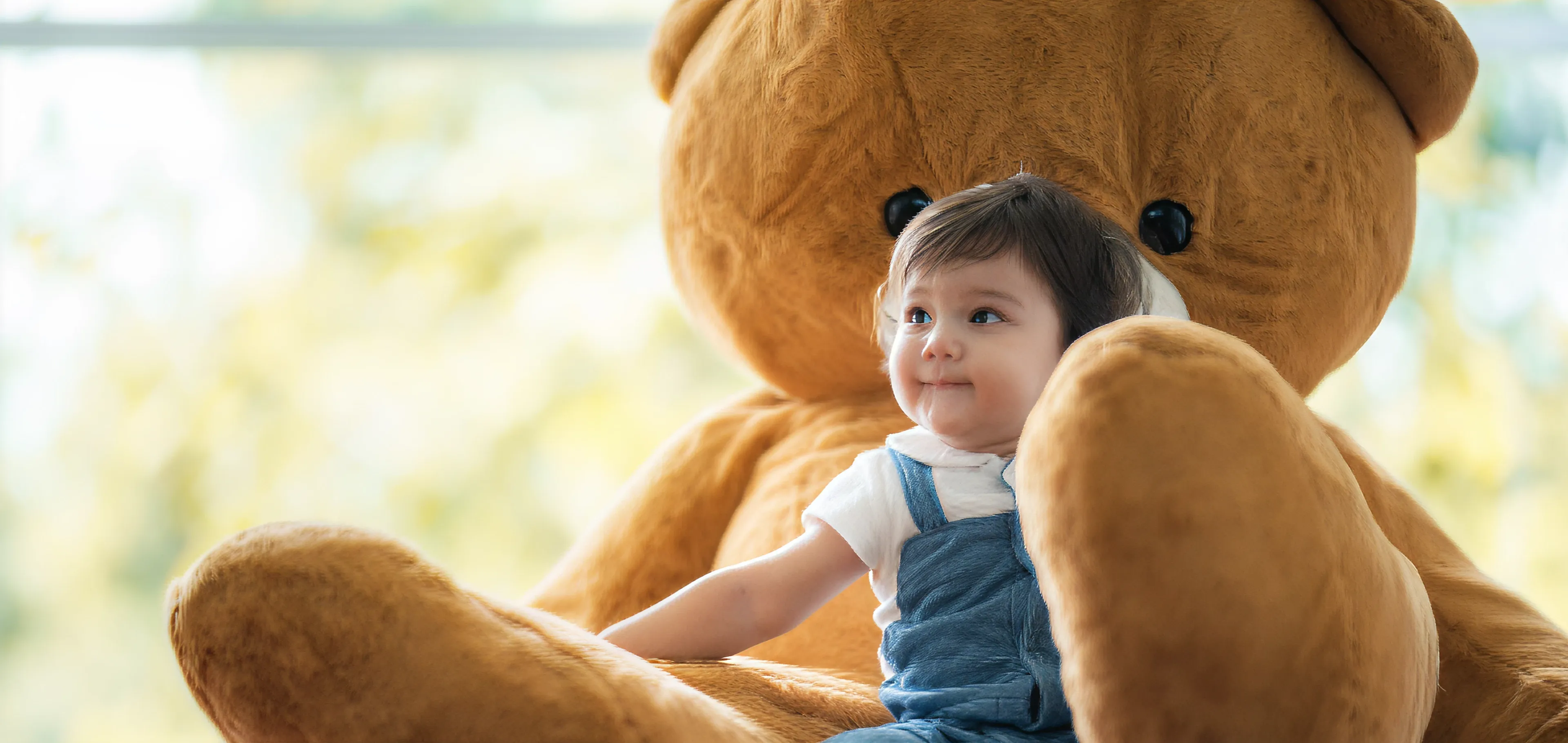
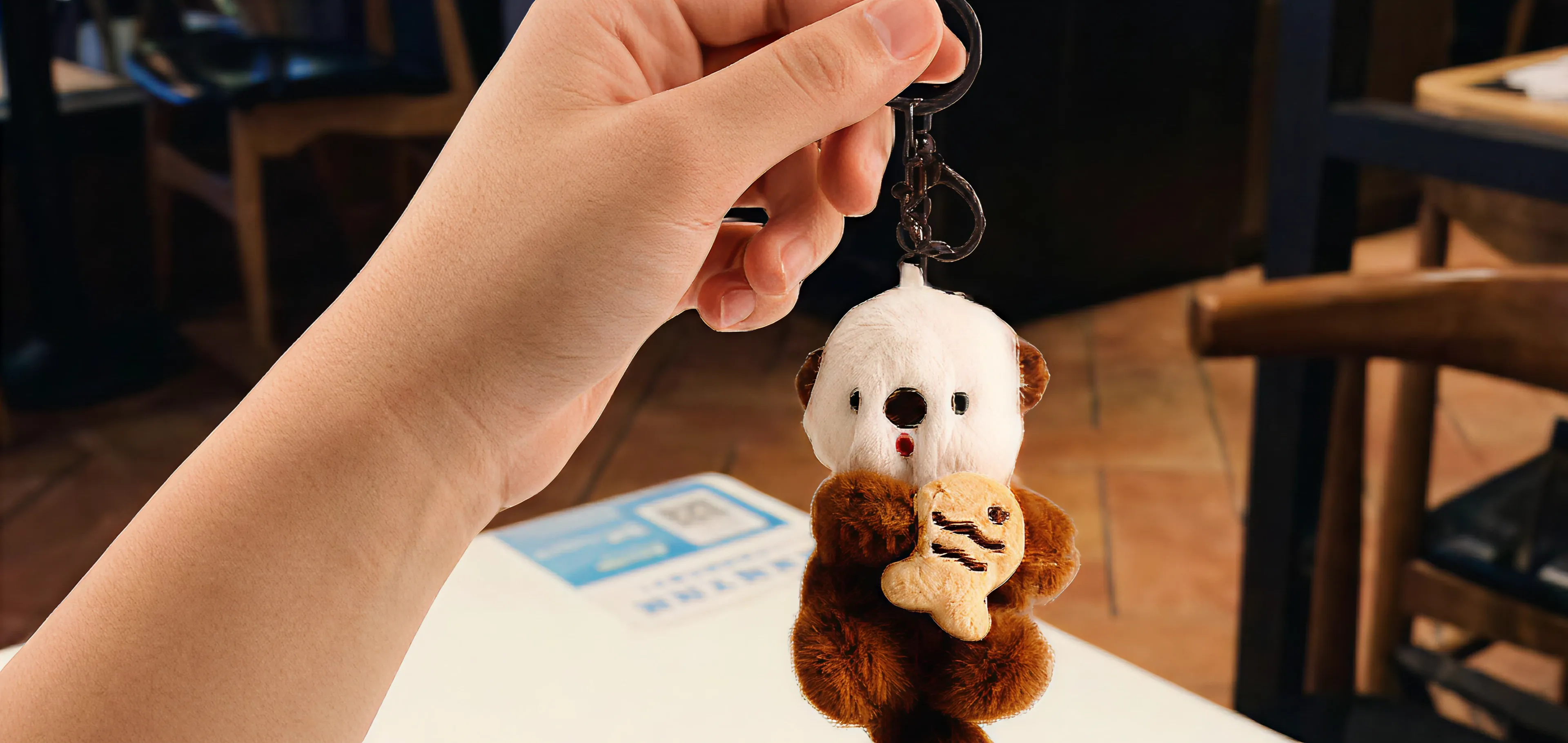
Size is the most intuitive cost driver and one of the largest. A bigger toy uses more fabric, more fill, and more sewing time, and the relationship is not linear — doubling height can more than double material volume. As a rough industry reference, a basic 20 cm (8 inch) plush in a 500 to 1,000 piece run often lands somewhere around $2.4 to $4.3 per unit before shipping, while a 25 cm piece tends to sit higher, and small items like plush keychains sit well below that. Large or life-size pieces are a different category entirely; our giant plush toys carry internal support structures and far more material, so they are quoted individually rather than off any standard scale. At the other end, mini plush toys use little material but still carry fixed setup, which is why their per-unit price does not fall as fast as the size suggests.
Fabric is the second baseline lever. A standard short-pile polyester is the economical default; long-pile fabrics, specialty textures, and custom Pantone-dyed colors all cost more, both in material price and because custom dyeing carries its own minimums. Our full materials range shows the spread from economical short-pile velvets through long-pile and specialty fabrics. The practical takeaway: if budget is tight, choosing a stock fabric color over a custom-dyed match is one of the easiest savings available, often with no visible difference to the end customer.
Two fabric details that quietly affect the number. First, pile length is not just an aesthetic choice — longer pile uses more raw fiber per square meter and is heavier, which raises both material cost and, later, shipping volume. Second, custom dyeing to an exact Pantone almost always means a dye-lot minimum, often measured in hundreds of meters; below that minimum you pay a surcharge or accept the nearest stock shade. For a small first run, asking the factory which stock colors sit closest to your brand palette can remove a surcharge entirely. The same applies to fill: standard fiber fill is cheapest, and the amount used (a firmly stuffed toy uses more fill and more closing labor than a soft one) is a small but real input that buyers rarely think to ask about.
Why MOQ Moves Your Per-Unit Cost More Than Anything Else
If you only remember one cost driver, make it minimum order quantity. Most plush factories set a working MOQ of around 500 to 1,000 units per design, and for good reason: every order requires the same fixed setup — pattern finalization, fabric purchasing minimums, machine threading, and a production line changeover — whether you make 200 pieces or 2,000. At low volume, each unit has to absorb a large share of that setup. At high volume, the setup becomes rounding error.
This is why a 100-piece "test run," which some factories will accept, carries a noticeably higher unit price than a 1,000-piece order of the identical design. You are not paying more for a worse product; you are paying for the same fixed costs divided among fewer units. The same logic applies to color and size variants. Two thousand pieces of one design is cheaper to produce than 500 pieces each of four colorways, because every color change means cleaning dye lots or re-threading and re-calibrating machines — each variant behaves like its own setup. If you are launching a line, concentrating volume into fewer SKUs at the start is the most reliable way to protect your unit cost, then expanding the range once a design proves itself.
Design Complexity: Where Quotes Quietly Climb
Two toys of identical size and fabric can be quoted very differently, and the gap is almost always complexity. Plush manufacturing is hand-guided work, and cost tracks "touch time" — the number of distinct sewing, cutting, and finishing operations a piece requires. A simple rounded animal with two pattern pieces sews quickly. A character with separate limbs, a detailed face, a tail, layered colors, and an outfit may need dozens of pattern pieces, curved seams that only experienced operators can sew cleanly, and slow, careful assembly.
Specific complexity costs to watch for: dense embroidery raises machine runtime, so a large embroidered logo or detailed facial features add real cost versus printed or appliquéd alternatives. Multiple fabric colors mean more cutting and more careful alignment. Small, precise features — accurate eye placement, a defined muzzle, expressive proportions — are exactly where cheaper factories cut corners and where the per-unit labor genuinely sits. For custom character plush and brand mascots, that accuracy is the whole point of the product, so it is worth quoting properly rather than chasing the lowest number. If your budget is fixed, simplifying the design — fewer pattern pieces, fewer colors, embroidery instead of complex appliqué — is more effective at lowering cost than negotiating, because it removes labor rather than squeezing margin.
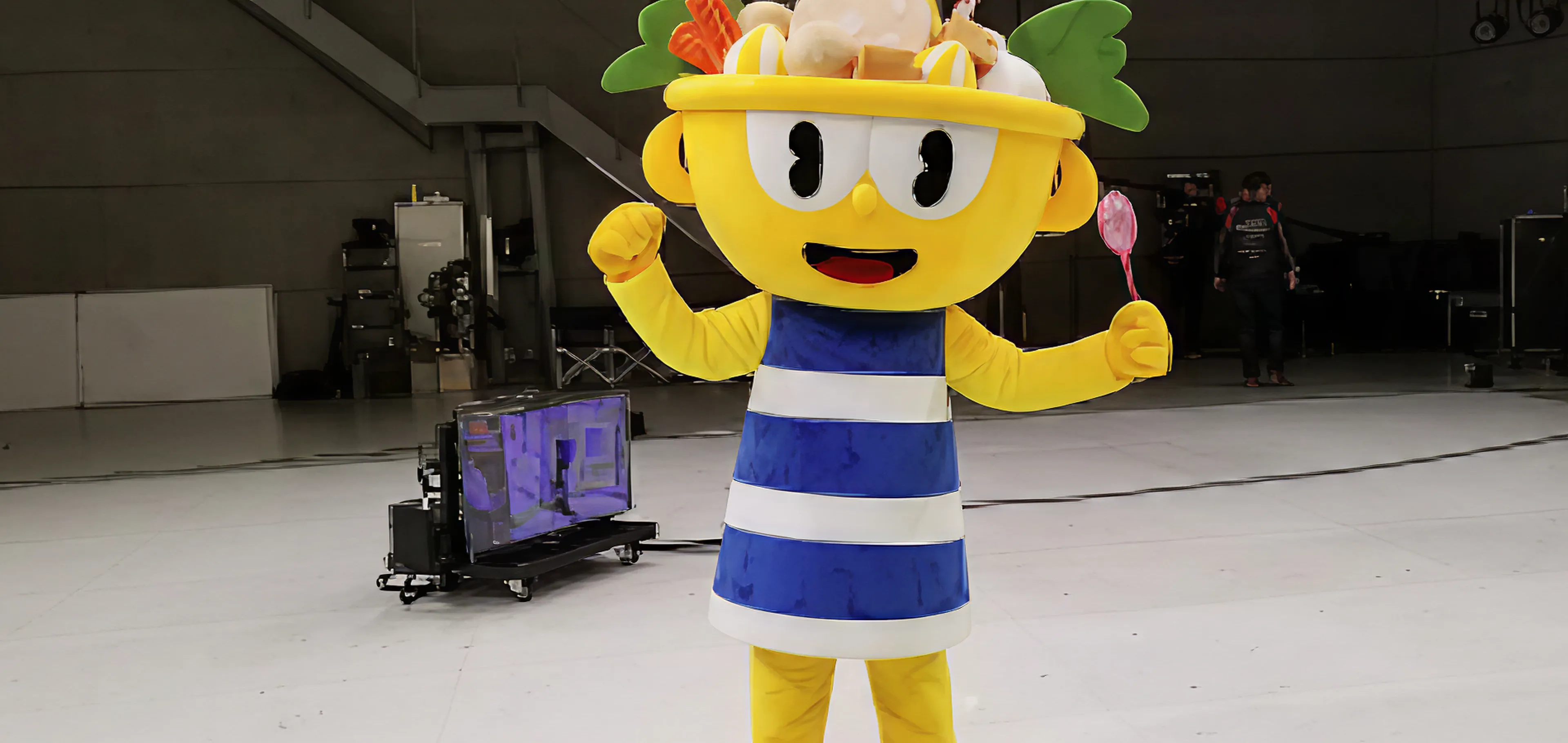
A useful way to read your own design before you ask for a quote is to count its pattern pieces in your head. Each distinct shape — every limb, ear, eye patch, color block, and gusset — is a separate piece to cut and sew, and the count is a rough proxy for labor. A character that reads as "simple" to a customer can still be complex to manufacture if it has layered colors or a structured pose. This is also why custom mascot plush for sports teams and brands is quoted carefully: the recognizability that makes a mascot work depends on getting proportions and facial geometry exactly right, which is skilled, slower sewing. Revision rounds compound this at the sample stage too — every change to the face or silhouette means re-patterning and re-sewing, so locking the design intent early, before sampling, keeps both the sample fee and the eventual unit cost down.
Accessories, Fills, and Add-Ons That Change the Number
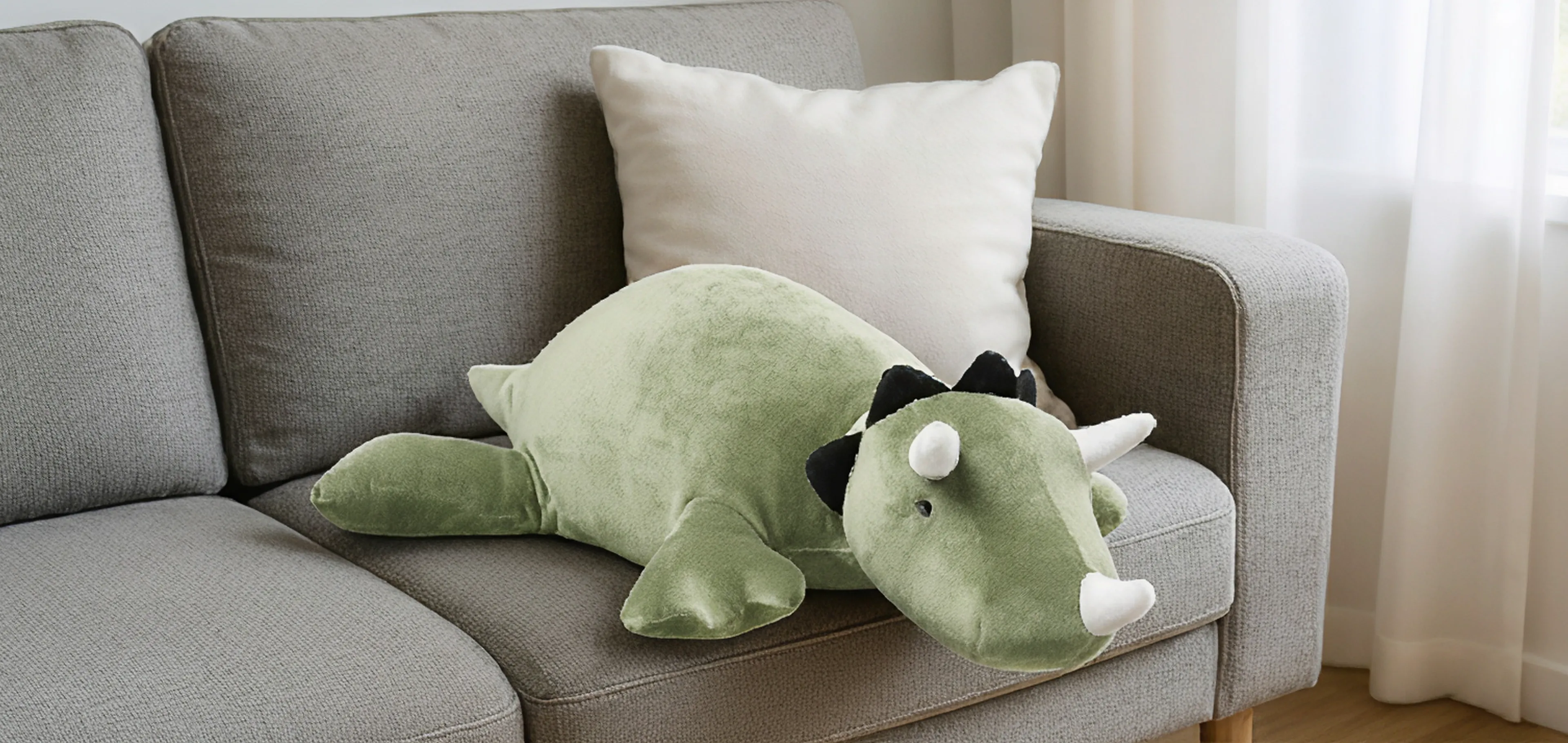
Beyond the body of the toy, add-ons each carry their own cost and sometimes their own minimums. Standard polyester fiber fill (PP cotton) is the economical default. Switching to alternative fills changes the math: weighted plush toys replace part of the fiber fill with PE pellets, which adds material cost, weight-control labor, and multi-chamber construction so the weight distributes correctly. Sound modules, lights, or any electronic component add the part cost plus assembly and additional safety considerations.
Hardware and finishing matter too. Keychain clasps, zippers on plush bags, removable outfits, embroidered hang tags, and woven labels are each a separate component to source and attach. Removable clothing in particular is effectively a small garment manufactured alongside the plush, so it can add meaningfully to both cost and lead time. None of these are reasons to avoid the features your product needs — they are simply line items that should appear clearly in a quote so you can decide which add real value for your buyer and which can wait for a later version.
Safety Testing and Certification: A Separate Line Item
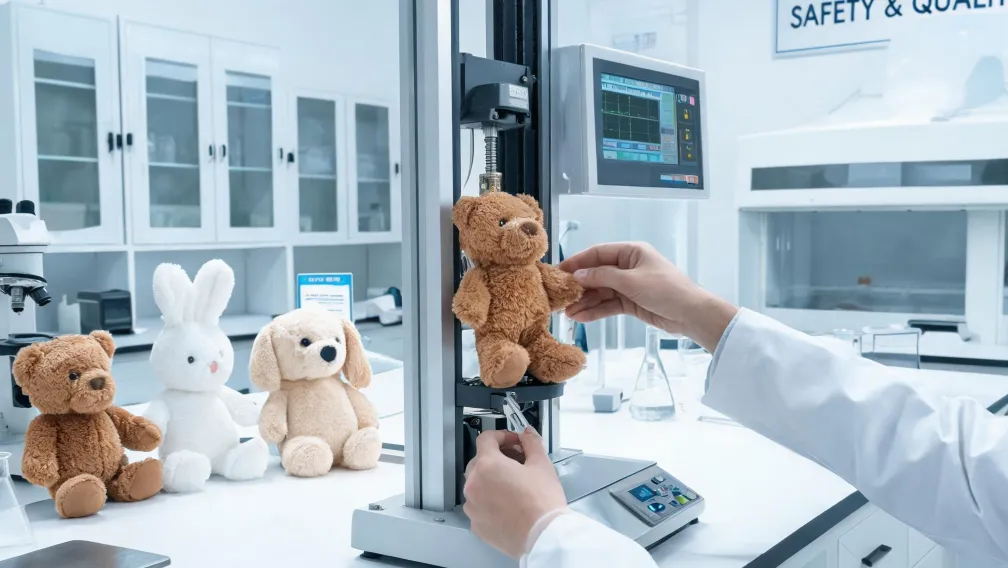
For any plush sold to consumers, and especially anything aimed at children, third-party safety testing is not optional and is quoted separately from the product. Depending on your target market, you may need EN71 for the EU, ASTM F963 for the US, CPSIA for US children's products, and REACH for chemical compliance. Each test program is its own line item, and across the industry a single product's testing can range from a few hundred dollars to $2,000 or more, depending on how many tests and markets apply.
Two points that catch buyers out. First, testing is per design and per market — selling the same toy into both the US and EU usually means separate test sets. Second, the cost is largely fixed regardless of order size, so like sampling, it weighs more heavily on small runs. The upside is that a manufacturer that already builds to these standards saves you from redesigning after a failed test. Our approach to safety and compliance covers the standards we build to and how testing is handled per batch, so the requirement is planned into a project from the start rather than discovered at the end.
Packaging, Freight, and the Real Landed Cost
The factory unit price is not what your toy actually costs to get into your warehouse. Two more layers sit on top. Packaging is the first: a polybag is minimal, but retail-ready packaging — a printed box, hang tag, and insert — commonly adds in the region of $0.50 to $1.50 per unit and increases shipping volume. Promotional and B2B-only product can often skip the heavier packaging entirely, which is a clean saving when the toy is not going on a retail shelf.
Freight is the second, and it is driven by volume more than weight, because plush is light and bulky. This is where vacuum compression matters: compressing plush before packing can cut carton volume substantially — by well over half in many cases — which directly lowers sea freight cost. Your Incoterms decide which of these costs sit in the factory quote versus your own books. EXW and FOB quotes are the factory-side numbers; CIF and DDP fold in freight and, for DDP, duties and clearance, producing a higher but more complete delivered figure. The number that matters for your own pricing is landed cost — factory price plus freight per unit plus duties plus inspection — which is why comparing two factories on FOB unit price alone can be misleading if their packaging and shipping assumptions differ.
Two costs buyers routinely forget to budget for sit in this final layer. Import duty depends on your country's tariff classification for stuffed toys and applies to the declared value, so it scales with your order's worth, not its size — worth confirming with a customs broker before you commit to a price to your own customers. Third-party inspection is the other: many buyers pay an independent agency to check the finished goods against the approved sample before the balance is paid, typically a few hundred dollars per inspection. It is optional, but for a first order with a new factory it is cheap insurance against a problem you would otherwise discover only after the container arrives. Building both into your landed-cost math from the start prevents the unpleasant surprise of a "cheap" FOB price that turns out expensive on delivery.
Getting an Accurate Number for Your Project
The reason a serious factory asks a lot of questions before quoting is that every section above depends on your specification. Size, fabric, complexity, order quantity, fills, accessories, target market, and packaging each move the number, and a quote given without them is a guess. The fastest way to a quote you can actually budget against is to come with as much of that spec as you have: reference artwork from multiple angles, intended size, target order quantity, the markets you will sell into, and whether you need retail packaging. With those in hand, a detailed quote — broken into the same line items described here — is straightforward to produce. If you have a design or even a rough concept, you can send us your project for a quote that itemizes each cost so you can see exactly where your money goes and which choices are worth adjusting.
FAQ
There is no single price, because a quote is built from separate costs: a one-time sample fee (commonly $100–$300, usually refundable against bulk), plus per-unit costs driven by size, fabric, design complexity, and order quantity, plus conditional items like safety testing and retail packaging. As a rough reference, a basic 20 cm plush at 500–1,000 pcs often falls around $2.4–$4.3 per unit before shipping. Your actual figure depends on your exact specification.
At most reputable factories, yes. The sample fee is typically deducted from your final invoice once your order reaches the agreed minimum, so for buyers who proceed to production it acts as an advance payment rather than a sunk cost. It becomes a real expense mainly when you sample many factories at once or run repeated revision cycles.
Most plush factories work from around 500–1,000 units per design. Smaller test runs (for example 100 pcs) are sometimes accepted but carry a higher unit price, because the same fixed setup is spread across fewer units. Small items such as keychains can start lower, while large mascots and complex pieces may have their own minimums.
Because every order carries the same fixed setup — pattern finalization, fabric minimums, machine threading, and a line changeover — regardless of quantity. At low volume each unit absorbs a large share of that setup; at high volume it becomes negligible. Concentrating volume into fewer SKUs and colors is the most reliable way to lower your per-unit cost.
Usually no — testing such as EN71, ASTM F963, CPSIA, and REACH is quoted as a separate line item, because the applicable tests depend on your target market. Testing is largely per design and per market, and the cost is mostly fixed regardless of order size, so it weighs more on small runs.
FOB and EXW quotes are factory-side numbers and do not include international freight or duties. CIF adds freight; DDP folds in freight, duties, and customs clearance to your destination. The figure that matters for your own pricing is landed cost — factory price plus freight per unit plus duties plus inspection — so comparing two factories on FOB unit price alone can mislead if their packaging and shipping assumptions differ.