Custom Plush for Brands and IP: How to Turn Your Character into Merchandise
A character lives on screen, on a page, or in a style guide. Plush is how it lands in someone's hands. For brands, IP owners, publishers, game studios, and creators, a custom plush is one of the few pieces of merchandise people keep on a shelf, photograph, and hand to a friend. This guide walks through how to turn a character into plush the right way: keeping it on-model, sorting the licensing, and getting a product that is safe and retail-ready.
We build character and brand plush for a living, so this is written from the production side. It covers why plush works for IP, how to keep a character recognizable once it becomes a soft 3D object, the steps from artwork to bulk order, the licensing and IP points to settle before you start, and the real numbers on minimums, cost, and timing.
How do you turn a brand character or IP into custom plush? You give a manufacturer the character artwork, target size, colors, and materials, plus proof that you own or are licensed to use the character. The factory turns that 2D design into a 3D pattern, makes a sample for you to approve, and produces the run once the sample, and for licensed IP the licensor, signs off. The work that decides whether it succeeds is keeping the plush on-model: matching the eyes, expression, proportions, and colors to the character your audience already knows.
Why Plush Works So Well for Brands and IP
Plush turns a flat character into something physical and huggable, and that creates an emotional pull most merchandise can't reach. A pen or a tote bag gets used and forgotten. A well-made character plush gets displayed, gifted, photographed, and posted, which is passive brand exposure you can't easily buy. It carries a high perceived value, so fans treat it differently from a standard giveaway.
The audience is wider than it used to be. Adults now make up a large share of plush buyers, collecting character plush the way they collect figures, so a soft toy works for a kids' property and an adult fandom alike. That reach shows up across a lot of programs:
- Fan and retail merchandise: collectible character plush sold online, in stores, or at conventions.
- Launch tie-ins: plush released alongside a film, game, book, or product.
- Crowdfunding and drops: Kickstarter or limited-run rewards that also test demand before a big order.
- Corporate and event: branded mascots for giveaways, client gifts, and trade shows.
- Institutional: university, sports club, museum, and theme-park mascots for merchandise and community.
In each case the plush is doing more than decoration. It gives someone a way to keep the character close, and that physical connection is what turns a viewer into a fan and a fan into a repeat buyer. A full range of plush merchandise, from charms to large display pieces, lets a brand meet fans at different price points.
Getting the Character Right: On-Model Is Everything
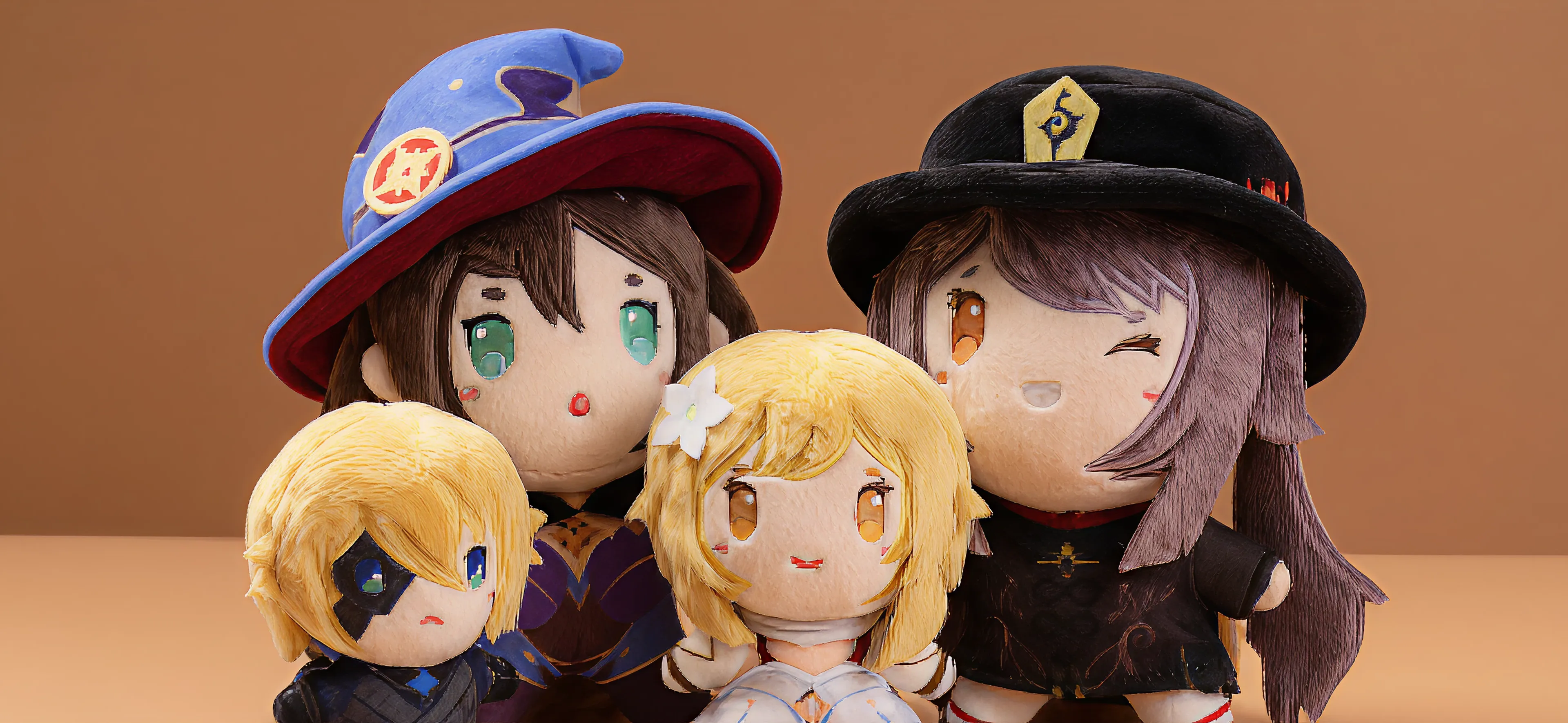
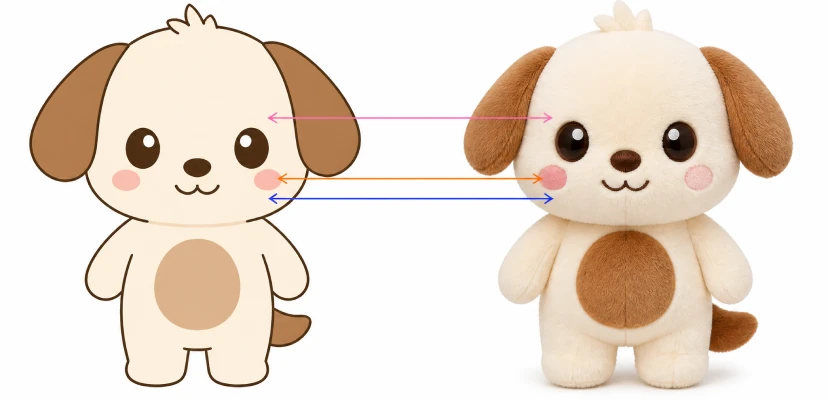
A character usually starts flat: a drawing, a logo, a book illustration, a game asset, or a style-guide image. Plush is a different medium. Fabric has shape, stuffing creates volume, and embroidery changes an expression. Some details have to shift to work in three dimensions, and the whole job is making those shifts without losing the character. For licensed and branded plush, accuracy is not a nice-to-have. Fans notice a wrong eye shape, and brand teams notice a color that is off from the guide.
Here is what on-model accuracy costs when it slips. In one licensed run, an entire 30,000-unit order was rejected because the face embroidery sat about two millimeters outside the style-guide tolerance. The toy was well made, but it was no longer the character, and the result was a missed launch window and retailer chargebacks. That is the standard licensed plush is held to, and it is why the face, the proportions, and the colors get locked down before anything scales.
Working from your brand guidelines or model sheet, a good manufacturer translates the character to plush and flags where a 2D detail needs adjusting, then confirms the direction with you. If all you have is a rough sketch or a single illustration, the design side can be developed to production standard. The full detail on files, views, and specs is in our guide to preparing artwork for plush production, but the principle is simple: the more clearly the character is defined, the closer the first sample lands.
From Artwork to Approved Sample: The Process
A custom plush program runs through a set sequence, and knowing it helps you plan approvals and timing.
- Brief: you supply the character artwork, target size, colors (Pantone), fabric and packaging preferences, target market and age grade, and proof of usage rights.
- Feasibility and control artwork: the factory reviews the design for production and builds the technical spec, dimensions, seam placement, embroidery maps, and a fabric assigned to each part.
- Sampling: a physical prototype is made so you can judge expression, fabric, color, and shape. Expect one to three revision rounds.
- Approval: you sign off on a sample, and for licensed IP the licensor approves it too. That approved sample becomes the production standard.
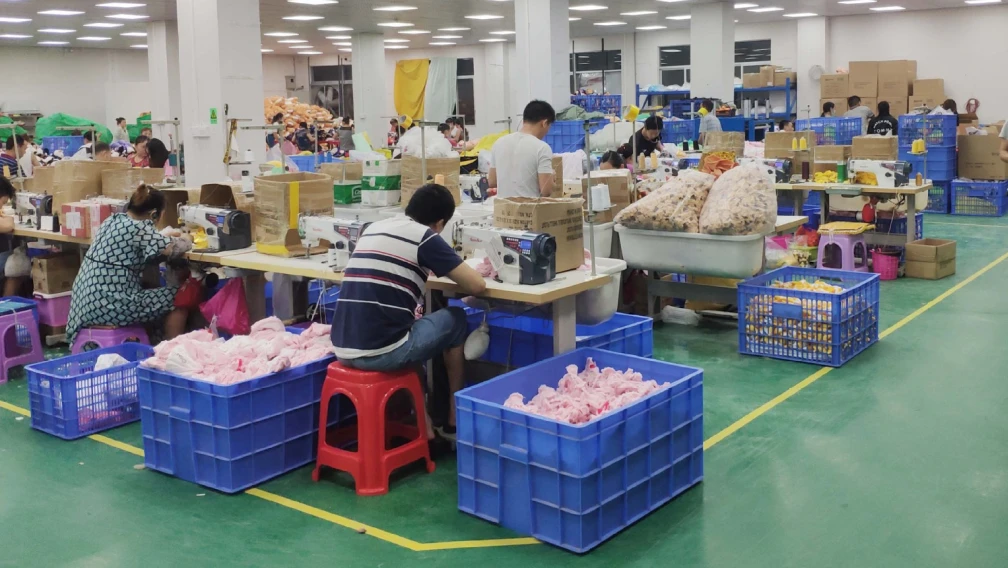
- Bulk production: the approved pattern is cut and sewn at volume, with every unit matched to the sample.
- QC and packing: inspection through production, then retail-ready packaging, tags, and shipping.
The approved sample is the anchor for everything after it. Color, hand-feel, fill density, and facial accuracy can only be judged on the real object, which is why no licensed run should go ahead on artwork alone. Once you approve it, the bill of materials is locked so nothing substitutes quietly in production.
Design Choices That Shape the Product
A few decisions set the look, feel, and cost of a character plush. Making them on purpose, rather than leaving them to the factory, keeps the product on-brand.
| Choice | Common options | Notes |
|---|---|---|
| Size | Charm or keychain (5-10 cm), standard (20-25 cm), large or jumbo (up to 1 m and over) | Smaller sizes lower cost and order risk; large pieces make display and photo impact |
| Body fabric | Short plush (velboa), minky, faux fur, fleece | Short plush holds embroidery crisply; minky is the softest premium hand |
| Fill | PP cotton (standard), high-density, recycled PET, weighted pellets | Denser fill holds shape on a shelf; recycled fill suits an eco line |
| Eyes and features | Embroidered or plastic safety eyes | Embroidery is safest for young ages and keeps a soft face |
| Branding | Embroidery, woven or printed labels, appliqué, print | Match the method to the fabric and the logo detail |
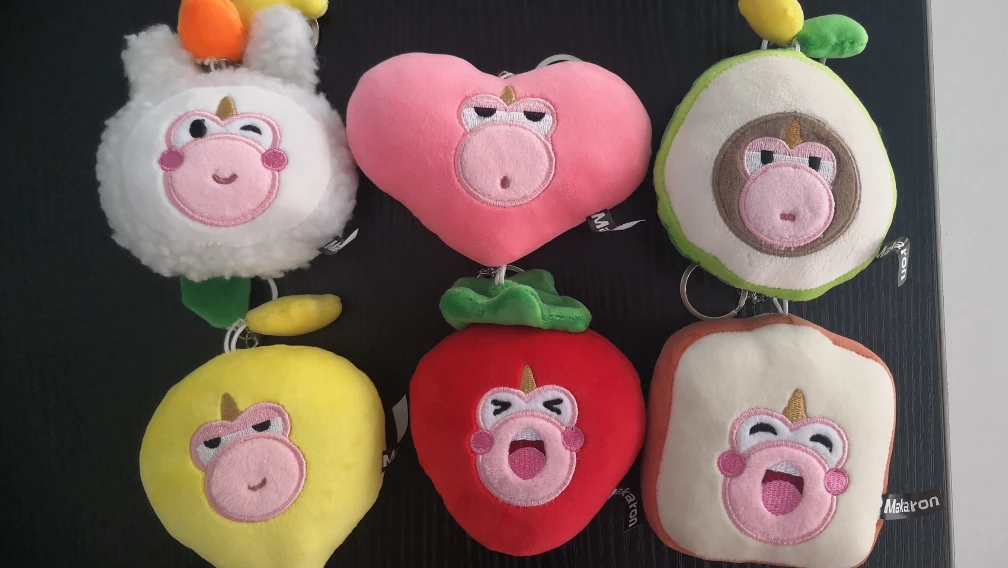
Two points matter more on licensed work than people expect. First, the face fabric and the fill quality carry the character: a short, clean fabric keeps embroidered features sharp, and a high-density fill stops limbs from sagging after a few weeks on a shelf. Second, format follows the program. A blind-box or fan-goods line leans on mini plush and plush keychains, a mascot campaign wants a recognizable mascot plush, and a hero retail piece might be a giant plush for shelf presence. Our fabric and fill guide goes deeper on matching materials to the design, and the full range sits on our materials page.
Licensing and IP: Rights, Approvals, and Protection
Do you need to own the IP to make custom plush? You need to own the character or hold written permission or a license to use it before production begins. This matters most for fan-inspired designs, anime-style characters, game characters, and entertainment properties. A responsible manufacturer will not produce a protected character without proof of rights, and settling this first protects you and the factory both.
For licensed IP, build the approval path in from the start. Confirm who signs off on the sample, and for a third-party license expect the licensor to review and approve it, sometimes through a formal authorization tied to a defined SKU scope. That approval is what keeps 30,000 units from being rejected after they are made.
Protecting the character during production comes down to a few habits that experienced licensed factories already follow:
- Sign an NDA before sharing full design files, and share only what is needed early on.
- Keep files and patterns controlled: version-controlled, access-restricted digital files, not cutting patterns left on open tables, which is how backdoor copies start.
- Track every prototype with a code and a distribution log, and have pre-production samples returned or destroyed.
- Register your rights in key markets. Trademarks and design registrations, through systems like the Madrid Protocol and the Hague System, strengthen enforcement where the toy is sold.
- Vet the factory: a supplier with licensed-brand experience and audits such as ISO 9001, BSCI, or ICTI is used to confidentiality and compliance.
One structural choice sits underneath all of this. Under an OEM arrangement, you provide a proprietary design and the factory makes it exclusively for you, which fits brands with real IP to protect. ODM, where you adapt an existing design, is faster and cheaper but offers less exclusivity, since a similar product may be sold to others. For a character you own, OEM is almost always the right path.
MOQ, Cost, and Timeline: What to Expect
Custom plush is more capital-intensive than print merchandise, so it helps to plan the numbers early.
- MOQ: fully custom plush is usually most cost-effective from around 300 to 500 units per design, with lower minimums common for small items like keychains and small-lot options available to test a design.
- Sampling: a prototype typically takes about 7 to 14 days after the spec is set, with one to three revision rounds.
- Lead time: bulk production usually runs about 35 to 55 days after sample approval, depending on size, quantity, and complexity.
- Cost drivers: size, number of fabric pieces, embroidery colors, and accessories. Simplifying a design is the most direct way to lower the per-unit price.
A practical tip from the buyer side: ask for quotes at the exact quantity you plan to fund, since the factory's standard run may be larger than you need, and build sampling into the schedule rather than rushing it. Many brands validate a new character on a crowdfunding platform or a small first drop before committing to a large order, which lowers the risk on an unproven design. Keeping the first run modest and reordering once it sells is a common, low-risk way to launch.
Safety and Retail Readiness
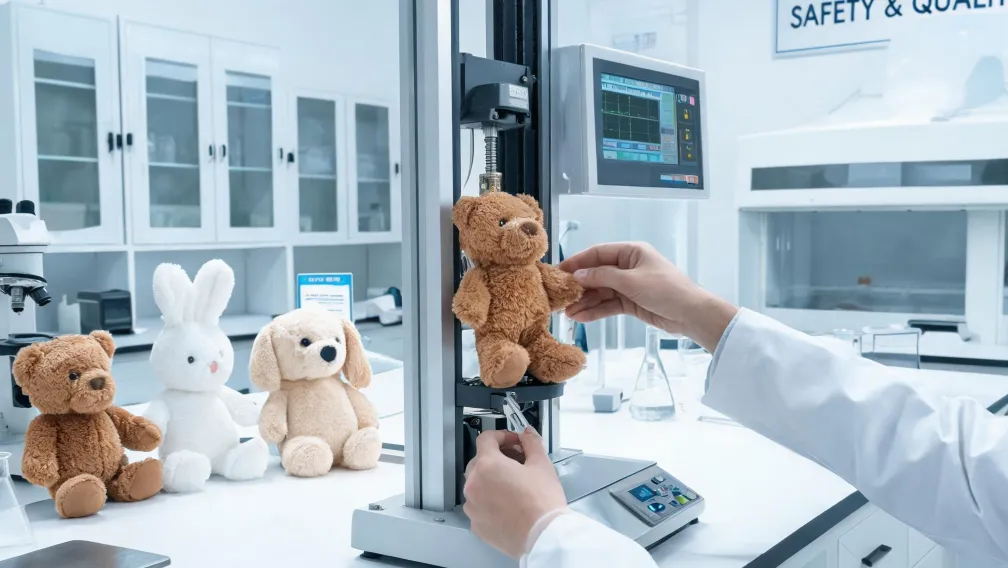
A character plush headed for retail has to clear the safety standard for its market before it can sell. Which standard depends on where it ships: ASTM F963 and CPSIA for the United States, EN 71 for the EU, ISO 8124 as a global benchmark, and Japan's ST standard. The right testing depends on the target market, the age grade, and the materials, small parts, stuffing, labels, and packaging involved.
Two rules keep this clean. Test every new design at an accredited lab rather than reusing an old report, because reports have to be specific to the actual toy. And design safety in from the start: embroidered eyes instead of glue-on plastic parts for younger ages, securely attached components, and a sewn-in tracking label for traceability. Our overview of safety and compliance and our guide to plush toy safety standards cover how this is handled by market.
Retail readiness is the last layer. Packaging carries the brand as much as the toy does: a hang tag with the character's name and backstory, an in-seam or tush tag that holds both branding and the required regulatory information, and a polybag or a gift or window box for shelf presence. These get decided alongside the plush, early in the project.
Bring Your Character to Life in Plush
Send us your character, whether it is a finished style guide or a single sketch, and we will tell you what is needed to make it on-model, safe, and ready for your market. As a factory-direct custom plush manufacturer, we keep design, sampling, and production under one roof, handle licensed work under NDA, and lock the specs so every unit matches the sample you and your licensor approve. Tell us about your project and we will map the artwork, materials, and minimums for your character plush program.
FAQ
Custom character plush is a soft toy made from a specific character or brand design rather than a generic shape. A manufacturer turns the character's artwork into a 3D pattern, matches the colors and features, and produces it as merchandise. It is used by brands, IP owners, publishers, game studios, and creators for fan merchandise, retail, launches, and promotional campaigns.
Yes. You should own the character or hold written permission or a license to use it before production starts, and that applies to fan-inspired, anime-style, game, and entertainment characters. A responsible manufacturer will ask for proof of rights and will not produce a protected character without it. Settling rights up front protects both you and the factory.
Fully custom plush is usually most cost-effective from around 300 to 500 units per design. Smaller items like keychains often have lower minimums, and small-lot runs are sometimes available to test a design. Larger quantities lower the per-unit cost by spreading pattern and setup costs over more units.
By working to the brand guidelines or model sheet and locking the face, proportions, and colors during sampling. The eyes, expression, shape, and Pantone-matched colors are checked against the approved character on a physical sample before any bulk production. For licensed work, the licensor approves that sample, which is what keeps a run from being rejected later.
Yes. A finished vector or style guide gives the fastest, most accurate result, but a rough sketch or even a general concept is a valid starting point. The design team develops the artwork to production standard, then confirms the direction with you before sampling. Many original characters begin as a single drawing.
Plan on about 7 to 14 days for a sample after the spec is set, plus one to three revision rounds, then roughly 35 to 55 days for bulk production after approval. Size, quantity, complexity, and licensor approval steps affect the total, so building the approval path into the schedule keeps the launch on track.