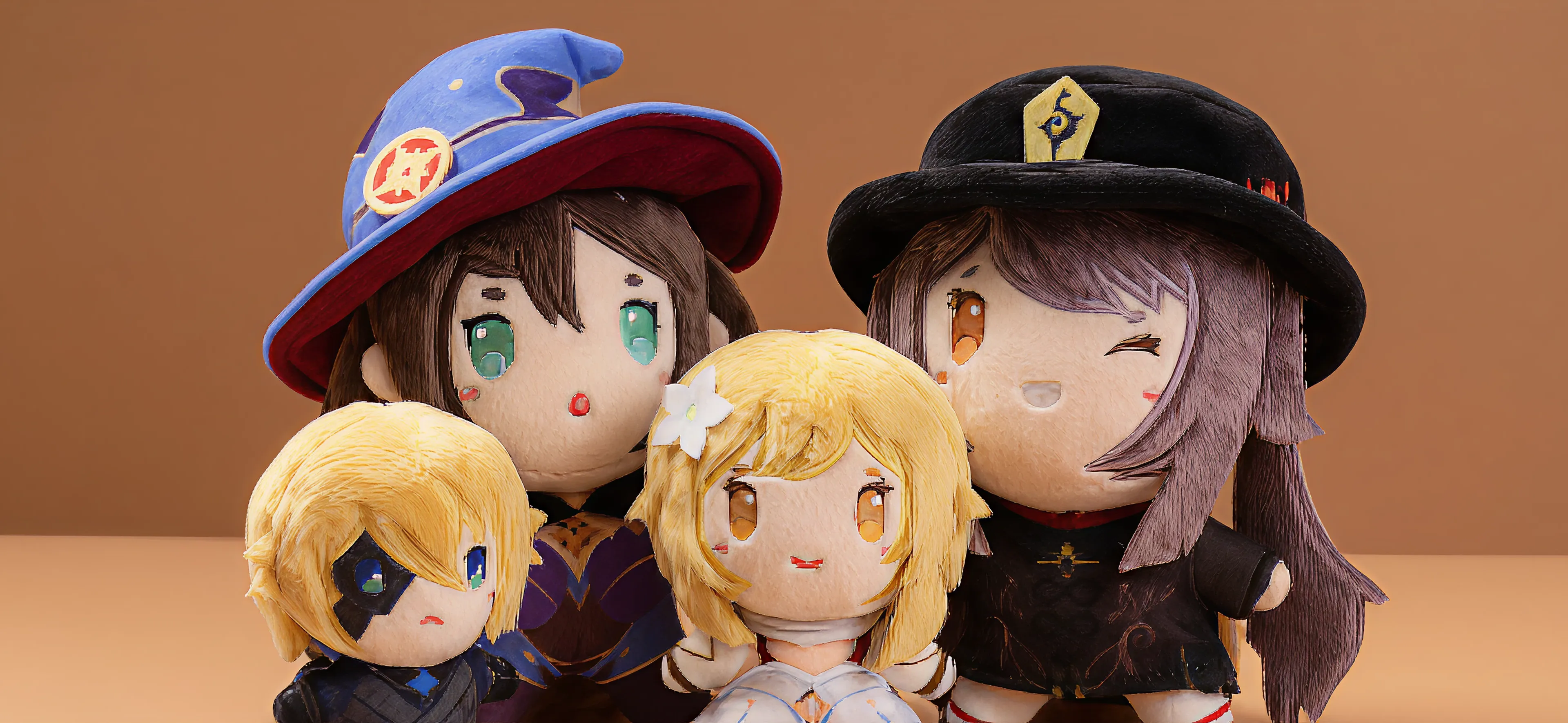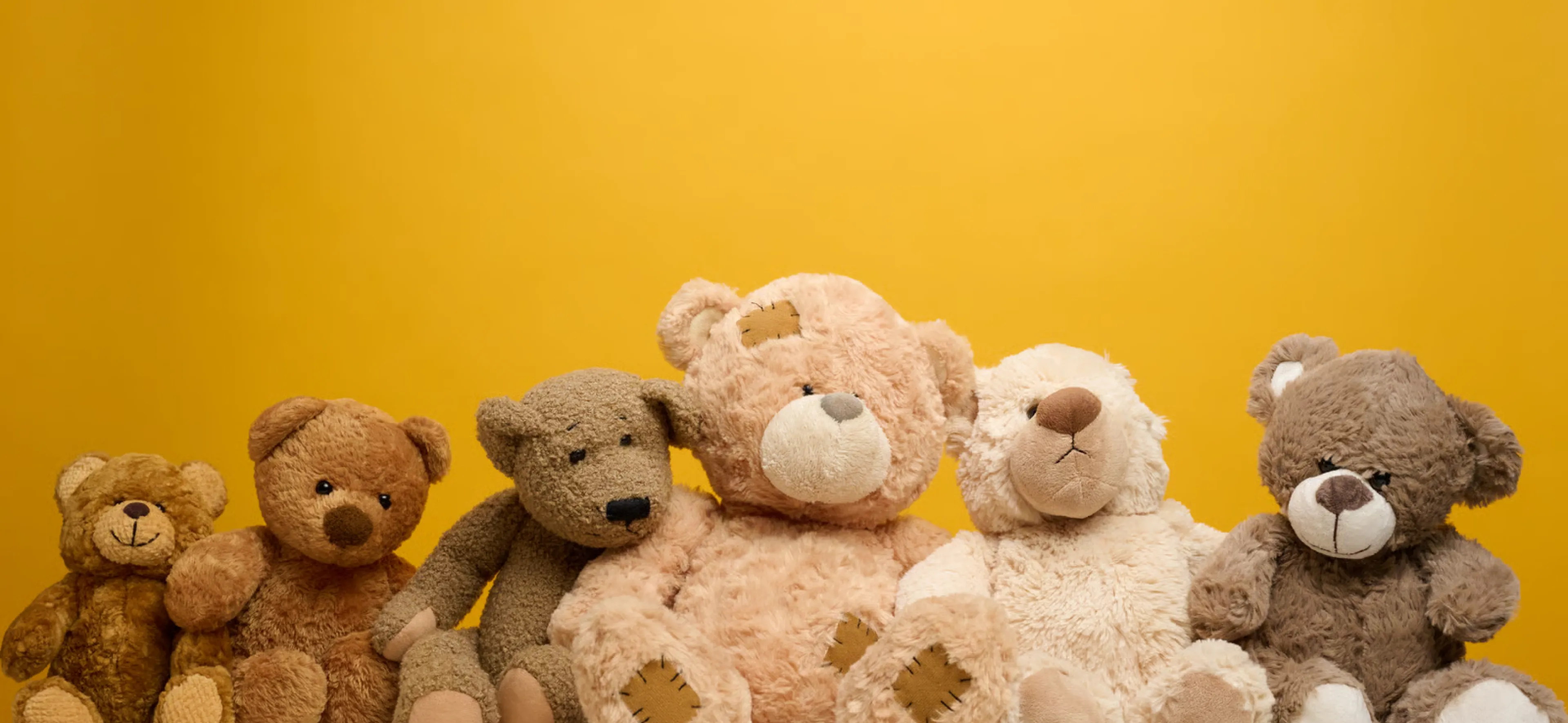
How to Convert an Existing Character IP into a Weighted Plush Toy: A B2B Engineering Guide
Brands capitalizing on the adult consumer focus on emotional wellness frequently attempt to introduce weighted versions of their existing plush characters. A common procurement error is assuming the factory can simply pour glass microbeads into the existing product pattern. This approach guarantees immediate manufacturing failure. The introduction of 2 to 4 pounds of internal mass fundamentally alters the toy's center of gravity, seam stress limits, and fabric tension requirements. Upgrading a standard retail plush into a therapeutic weighted item requires a complete structural teardown and pattern re-engineering.
This guide details the industrial protocols for converting an established character IP into a heavy, deep-pressure sensory toy. It covers volume displacement calculations, posture modification, limb reinforcement, textile lamination, and the mandatory regulatory re-testing required before releasing the new SKU to retail channels.
The Core Engineering Conflict: Volume Displacement
What is required to convert a standard plush toy into a weighted plush toy?
Converting a standard plush toy into a weighted variant requires redrafting the fabric pattern to accommodate internal containment pouches, upgrading the outer textile to a minimum of 300 GSM with woven backing, and altering the center of gravity to prevent the character from sagging or tipping over. The factory cannot simply add glass microbeads to the existing shell without causing immediate seam failure and shape distortion.
Standard plush toys rely on the physical volume of polypropylene (PP) cotton to fill out the fabric shell and hold the character's recognizable shape. Glass microbeads are dense and occupy very little physical volume compared to their weight. If a factory simply replaces 50 percent of the PP cotton with 3 pounds of glass beads, the character will look deflated, wrinkled, and physically collapsed. To maintain the IP's specific silhouette, pattern engineers must calculate the exact volume displacement and insert dedicated non-woven pouches for the beads, wrapping them securely in dense PP cotton so the outer shape remains tight and visually identical to the original toy.
Posture Modification and Center of Gravity
Gravity dictates the posture of a weighted plush. An existing character designed in a standing position will fail as a weighted toy. The heavy mass placed in the torso will cause the thin fabric legs to buckle, and the character will permanently fall over, rendering it useless for retail shelf display.
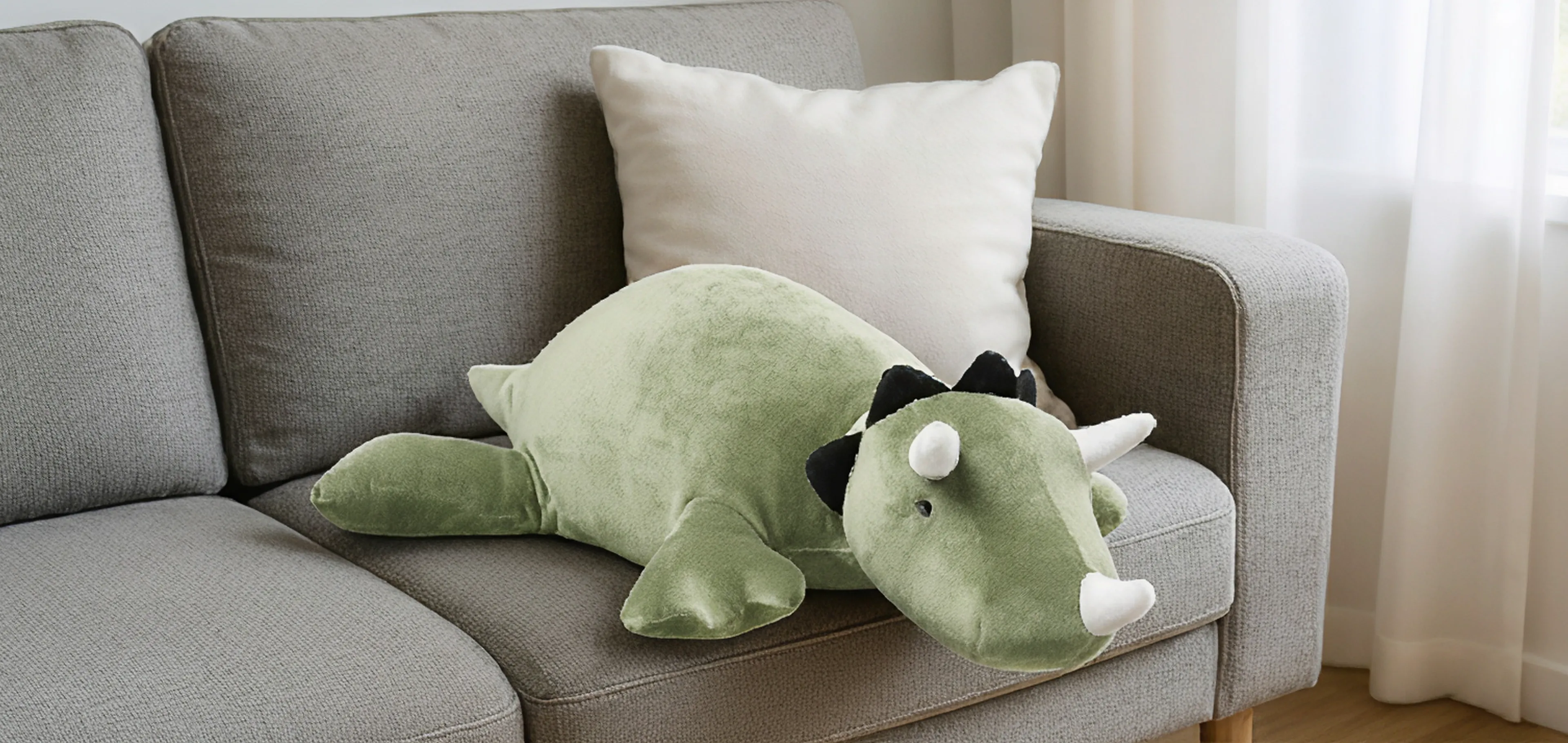
When executing an IP conversion, factory engineers generally shift the character's posture to a sitting or prone (laying on its stomach) position. A sitting posture lowers the center of gravity, allowing the factory to place the primary weight pouch directly into the base of the toy. This provides a stable, flat bottom. A prone posture is highly requested for therapeutic products because it allows the weight to be distributed evenly across the character's abdomen and limbs, optimizing the deep pressure touch (DPT) effect when placed on a consumer's chest or lap.
Upgrading the Outer Textile Shell
The original fabric specifications for a standard plush toy are rarely sufficient for a weighted variant. A standard 150 GSM Velboa will stretch aggressively under the kinetic load of a 3-pound internal pouch. This lateral stretch causes the character's facial features—specifically embroidered eyes and mouths—to warp downward, destroying the IP likeness.
To freeze the fabric geometry, manufacturers upgrade the material to a high-density textile (300 GSM to 400 GSM) and apply a secondary woven backing layer. This lamination process eliminates the stretch inherent in knit fabrics. While the exterior retains the required soft texture, the interior acts as a rigid canvas capable of holding heavy internal baffles without distorting the character's face.
Re-engineering Limbs and Stress Points
The attachment points where arms, legs, and ears meet the main torso are the primary failure zones during drop testing. In a standard toy, these seams face minimal stress. In a weighted toy, picking the character up by one arm applies massive leverage against the shoulder seam.
Pattern makers modify the character's limbs by widening the base circumference where they meet the body, distributing the stress across a larger stitched area. The sewing lines are upgraded from standard cotton thread to bonded nylon thread. Operators apply heavy bar-tack stitches at these junction points. If the IP design features extremely long, thin appendages (such as a monkey's tail or rabbit ears), the factory will firmly advise against placing any weighted beads inside those specific parts to prevent pendulum-force tearing during handling.
Mandatory Regulatory Re-Testing
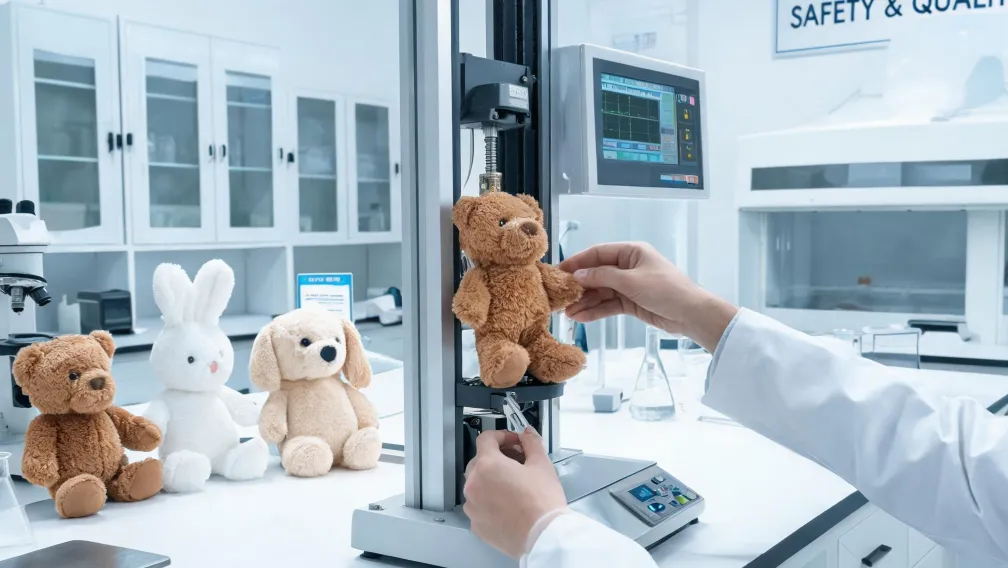
A B2B brand holding a valid ASTM F963 or EN 71 safety certificate for the original standard plush toy cannot legally apply that certificate to the new weighted version. The structural mechanics have changed entirely, voiding the previous compliance data.
The weighted variant must undergo a completely new round of third-party laboratory testing. The critical barrier is the kinetic drop test, where the heavy toy is dropped from 3 feet onto a hard surface to verify that the upgraded seams hold and the internal glass beads do not leak. Additionally, the new glass microbeads or polyethylene (PE) pellets must undergo chemical screening to certify the absence of heavy metals and restricted phthalates. Buyers must budget $800 to $1,500 and allocate two extra weeks to their production schedule for this mandatory re-certification.
Adapting Retail Packaging and Logistics
The transition to a weighted product forces an immediate update to the brand's packaging strategy. Standard plush toys are often hung on retail pegboards using simple plastic swift-tacks attached to the ear or sewn-in label. A 3-pound toy will instantly rip through a standard hangtag and break retail peg hooks.
Weighted plush requires floor-standing display-ready cartons (PDQ trays) or reinforced individual retail boxes. For direct-to-consumer (D2C) brands shipping from e-commerce warehouses, the heavy mass increases the risk of the product bursting through standard poly-mailers during transit. Upgrading to corrugated cardboard mailer boxes is highly recommended. Furthermore, procurement teams must update their ocean freight accruals, as the shipment will now be billed based on maximum container weight limits rather than volumetric CBM.
Initiating the IP Conversion Process
Upgrading a successful character into a weighted therapeutic product extends the IP's lifespan and captures a higher-margin adult demographic. However, it requires a manufacturing partner with direct experience in heavy-duty seam engineering and internal baffling.
To begin the conversion, submit the existing tech pack and physical samples of your standard plush to our engineering team. Review the structural requirements in our weighted plush toys section. Our pattern makers will evaluate your current custom character plush design, propose the necessary posture and seam modifications, and provide a clear timeline for re-prototyping and safety compliance testing.
FAQ
No. Standard patterns rely on lightweight PP cotton for volume. Adding heavy beads requires drafting new internal containment pouches and fabric baffles. Without these modifications, the weight will sink to the bottom, distorting the character's face and bursting the seams.
Standard plush fabrics like 150 GSM Velboa will stretch severely under the weight of the glass beads. This lateral stretch warps the character's embroidered facial features. The factory must use 300+ GSM fabric fused with a woven backing layer to lock the fabric dimensions in place.
Usually, yes. A standing character will become top-heavy and fall over when weight is added. Factories generally convert standing IPs into sitting or prone (laying down) postures to lower the center of gravity and provide a stable base for the weighted pouches.
Yes. The heavy mass drastically changes how the toy reacts to physical impacts. The new weighted version must undergo fresh ASTM F963 or EN 71 drop testing and seam tension testing to certify that the internal beads will not leak and create a choking hazard.
The visual exterior (colors, facial embroidery, apparel) will look identical to the original IP. However, the base of the toy or the limbs may be engineered slightly thicker to accommodate the internal bead pouches and distribute the seam stress safely.
You cannot use standard plastic swift-tacks or retail peg-hooks, as the 3-pound weight will rip the tags or break the display. Weighted plush must be merchandised in floor-standing PDQ trays or reinforced individual cardboard boxes to handle the physical mass.