Custom Plush Keychains: A B2B Guide to Bag Charms, Hardware, Sizes, and Bulk Orders
Plush keychains are the smallest thing we make and one of the busiest lines in our factory. A soft mini character on a metal clip costs little, ships light, and sells on impulse, so brands, retailers, event teams, and promotional agencies keep ordering them by the tens of thousands. In 2026 they picked up a second life as bag charms, and demand has climbed with the trend.
This guide is written from the factory floor. We make custom plush keychains for brand merchandise, IP characters, retail lines, and corporate giveaways, so it covers the decisions that actually change the product and the quote: the type, the hardware, the size, the safety testing, and the numbers you need to plan an order.
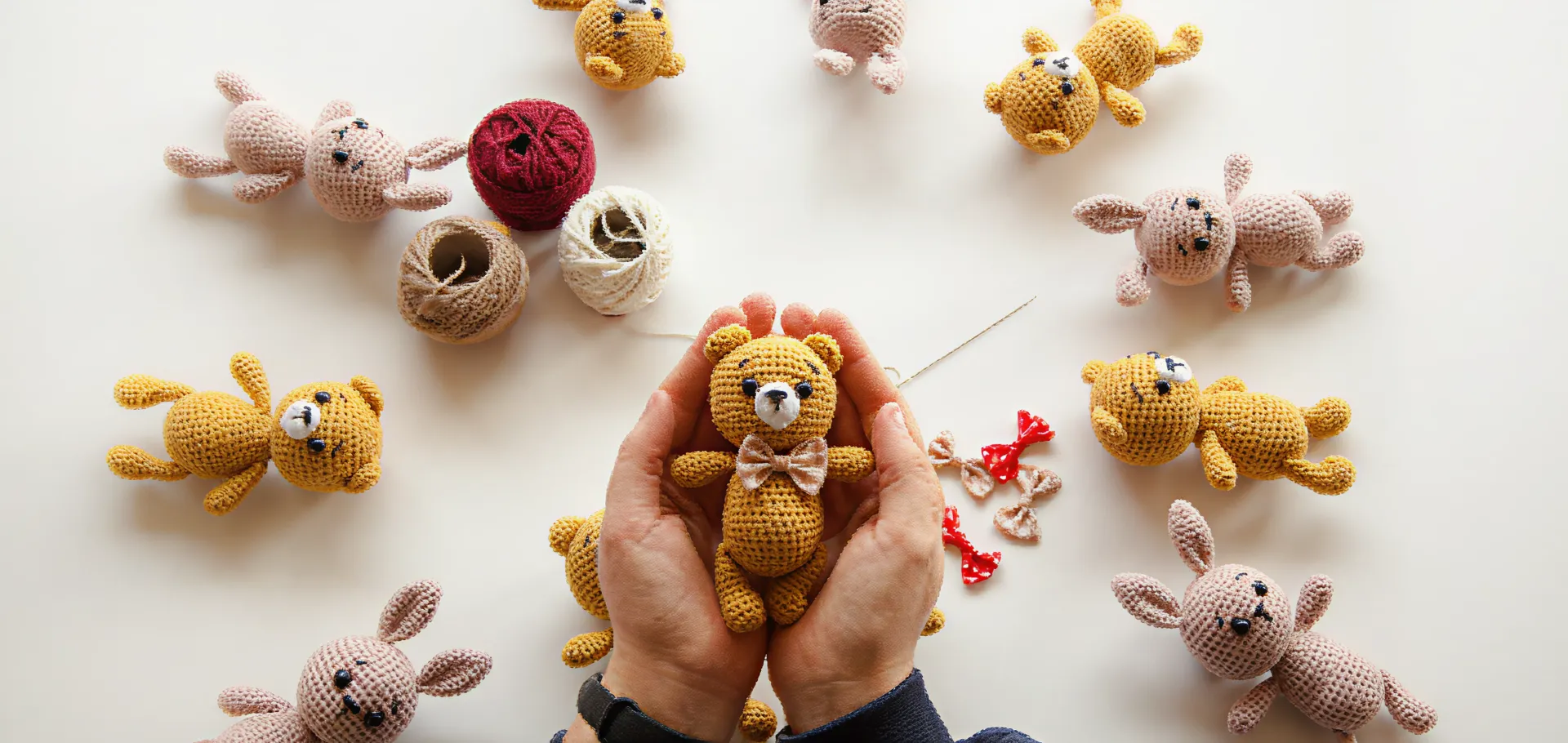
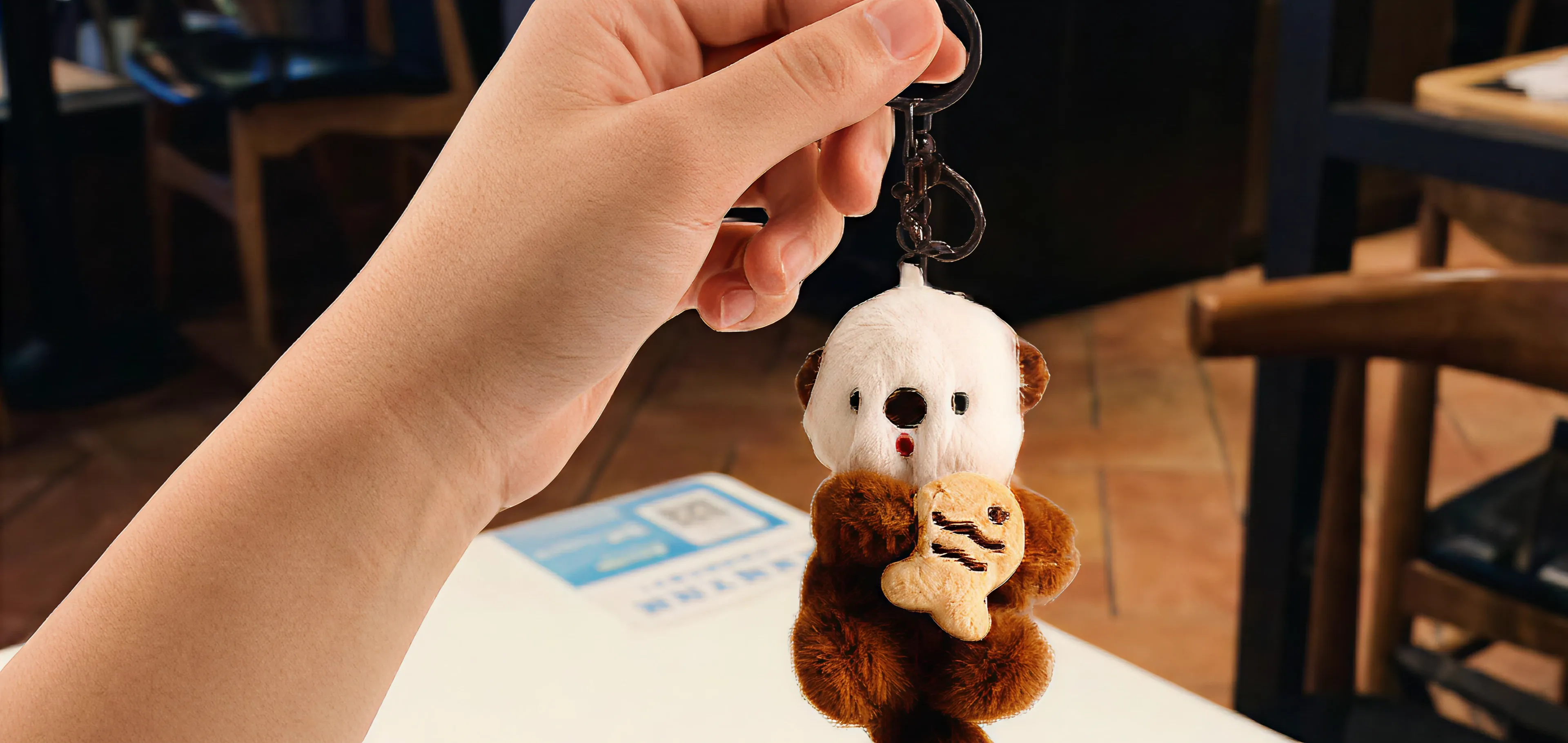
What is a custom plush keychain? A custom plush keychain is a small plush toy, usually 6-15 cm, made to your own design and finished with a metal attachment so it clips to keys, a bag, or a zipper. You choose the shape, fabric, color, decoration, hardware, and packaging, and the factory makes a pattern, produces a sample, and manufactures it to that spec. It works as a bag charm, a promotional giveaway, a retail product, or the first low-cost SKU for a new character.
Why Plush Keychains and Bag Charms Are Booming
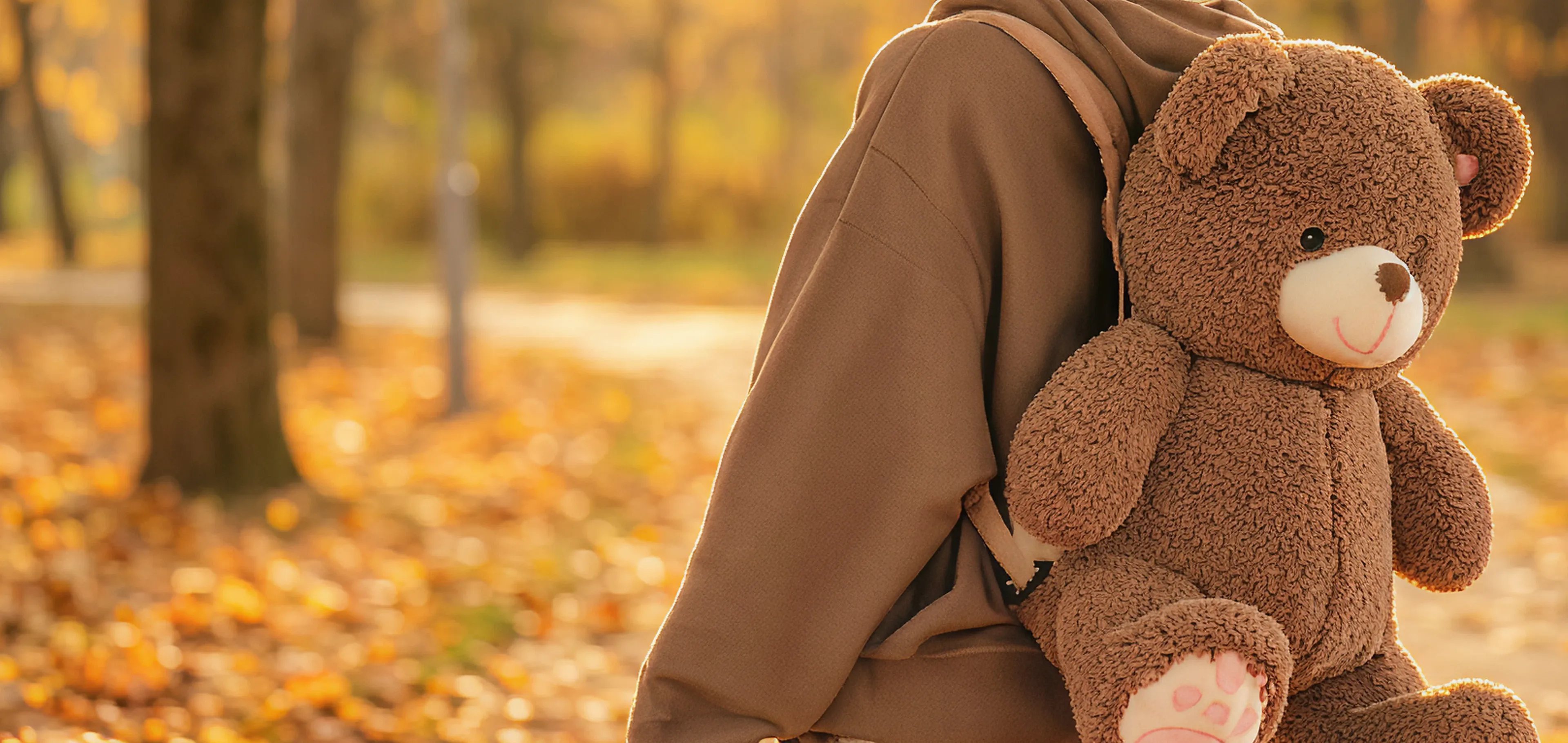
The bag charm has moved from a niche add-on to a mainstream fashion accessory. The fashion platform Lyst recorded a 153% jump in searches for bag charms, and wholesale marketplace JOOR reported roughly a 12x rise in bag-charm sales volume in the first half of 2025 against the same period a year earlier, with the number of brands selling them tripling. Luxury houses and independent makers are both in the category now, and a soft character clipped to a handbag is a normal sight.
A few forces keep the category growing:
- Bag charms became fashion. Clipping a plush character to a bag is a cheap, visible way for people to personalize an everyday item.
- Social media rewards small plush. Mini characters are easy to film, gift, and impulse-buy, so they spread fast online.
- Adults buy them too. The kidult trend means grown-ups collect and display plush, widening the audience well beyond children.
The blind-box boom around characters like Labubu pushed the same behavior further and turned collectible plush into a daily accessory. We covered that shift in our look at the Labubu and Pop Mart market impact. For a brand, this makes the plush keychain the cheapest, lowest-risk way to launch a character: small tooling, low unit cost, and high shelf appeal.
Types of Custom Plush Keychains
"Keychain" covers a few different products, and the right one depends on where it sells and how it gets used.
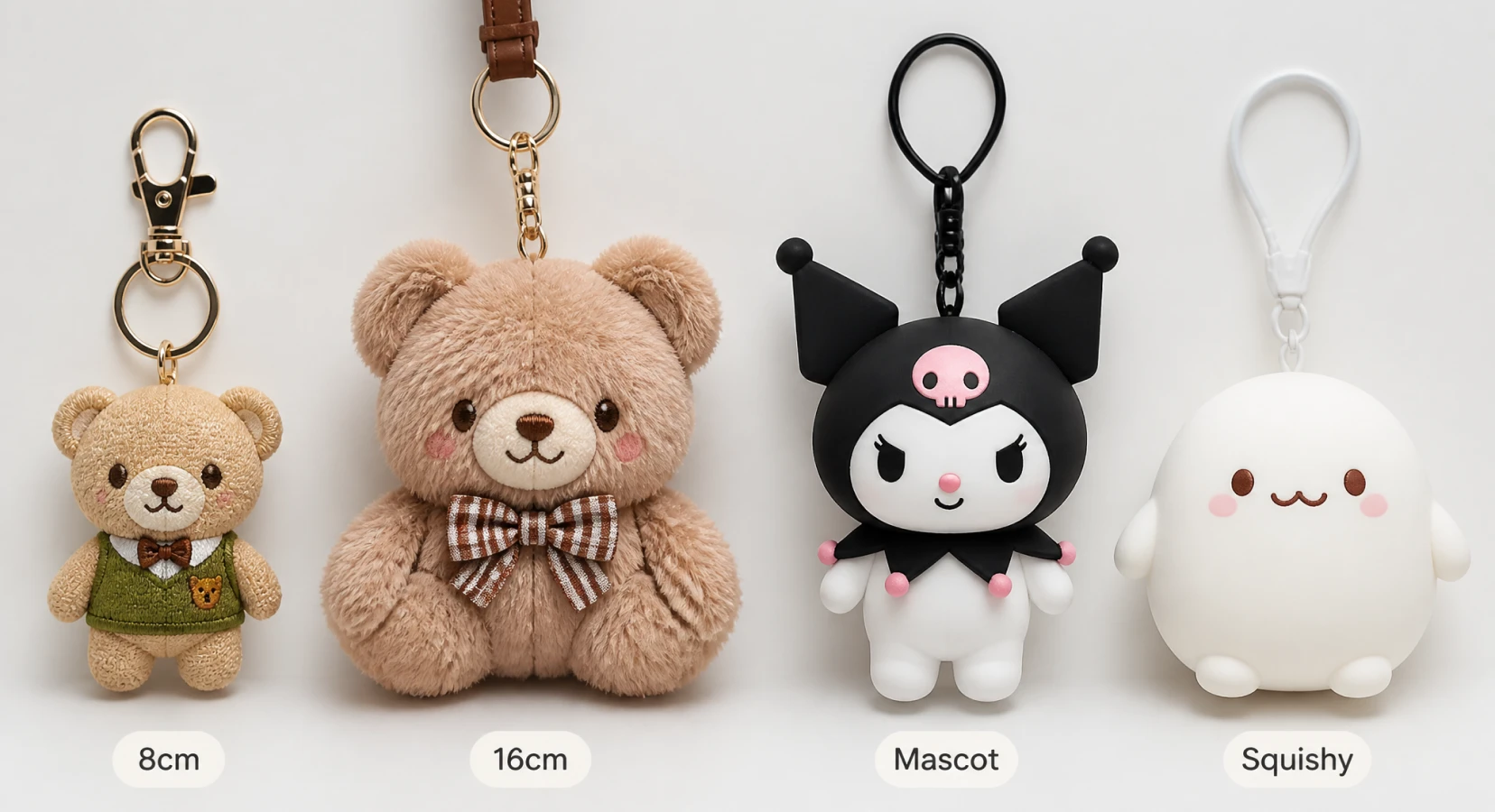
- Classic plush keychain: a 6-12 cm embroidered animal or character on a split ring or lobster clasp. The workhorse for promo and retail.
- Plush bag charm: usually larger at 12-20 cm and often fitted with a snap strap or swivel clasp so it wraps a bag handle. Built for fashion display more than for holding keys.
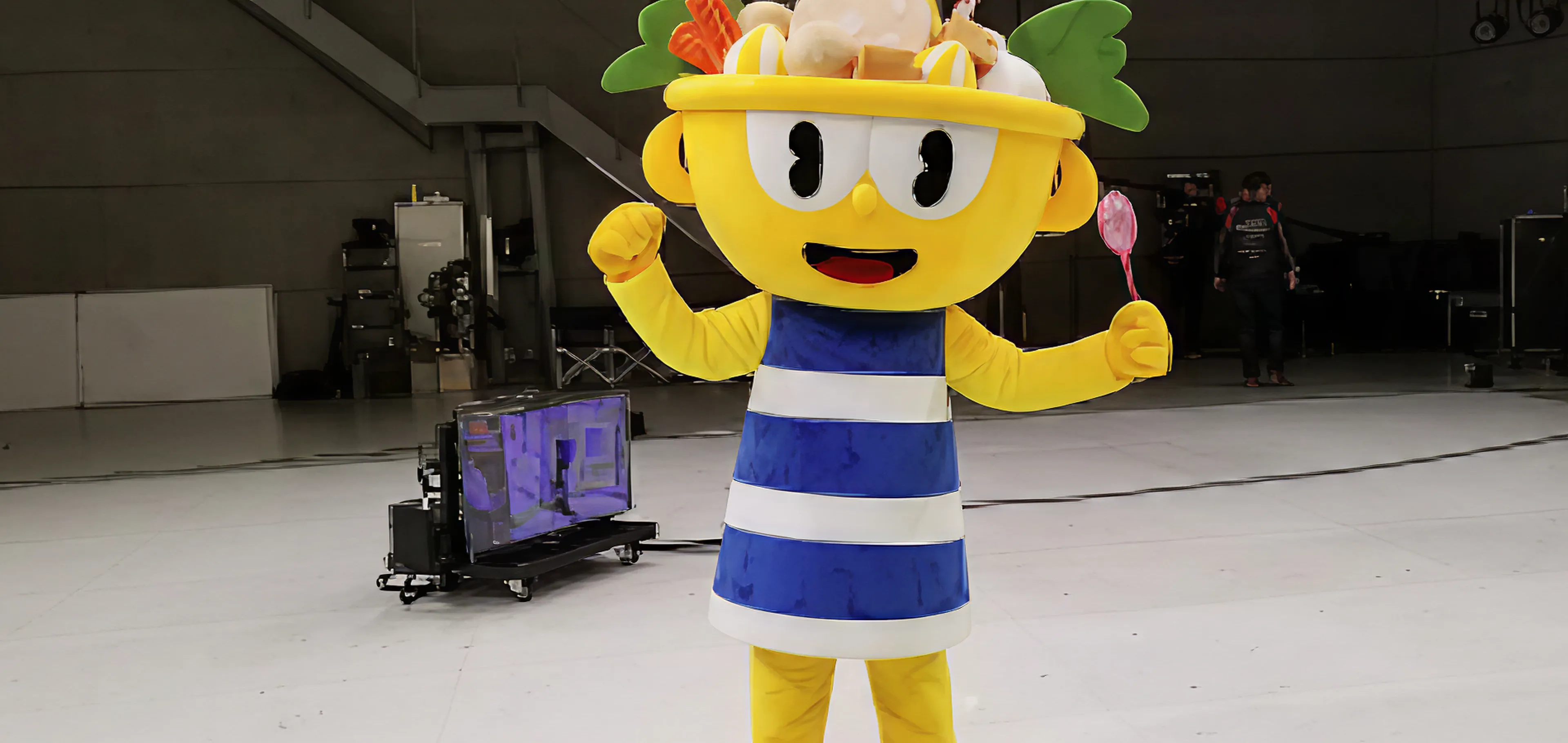
- Mascot keychain: a shrunk version of a brand or sports mascot, used for fan merchandise and event giveaways. See our custom mascot plush.
- Squishy / slow-rebound keychain: filled with slow-rebound foam for a soft, squeezable feel, popular as a stress-relief novelty.
Most orders start from one of these and get adapted to your character and channel.
Keychain Hardware and Attachments
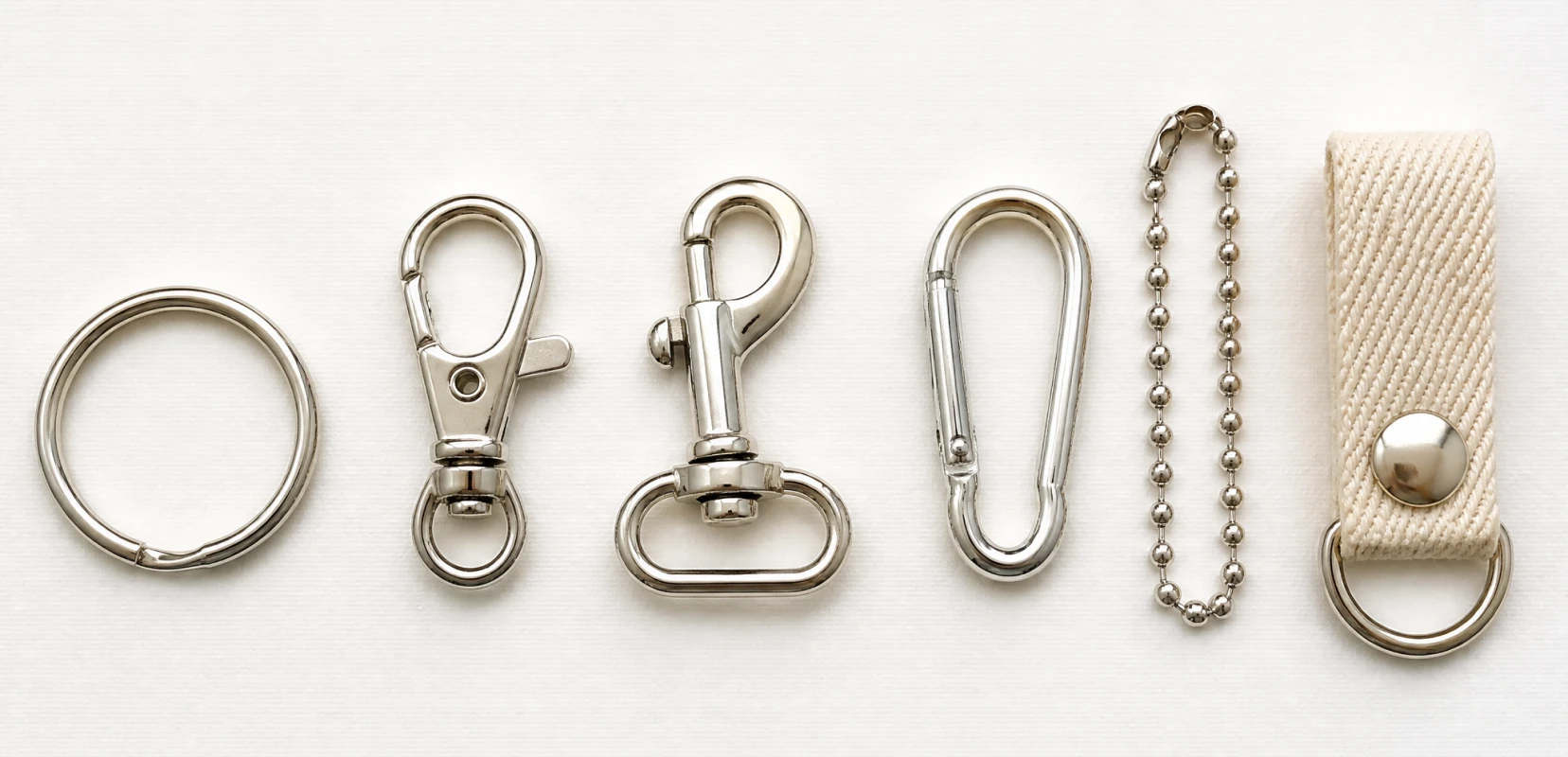
The metal attachment decides how the keychain gets used and how long it survives. These are the options we fit most often.
| Attachment | How it works | Best for |
|---|---|---|
| Split ring | Double metal loop, very secure | Key-holding keychains, everyday carry |
| Lobster clasp | Spring lever, quick on and off | Bag charms, fashion, frequent swapping |
| Swivel snap hook | Snap gate that rotates | Lanyards, bags, larger charms |
| Ball chain | Beaded chain, light and stylish | Teen and adult fashion pieces |
| Carabiner (non-load) | Spring gate, rugged look | Backpack and outdoor styling, decorative only |
| Snap-tab strap | Fabric strap with a snap button | Wrapping bag handles and straps |
Metal parts come in zinc alloy, stainless steel, and brass, usually plated in nickel, gold, black, or rose gold to match your design. Stainless steel resists wear and corrosion best; plated zinc alloy is cheaper but softer under repeated stress, so we pick the grade to fit the channel and the price.
The Attachment Is the Weak Point
Size and Keeping Detail at Small Scale
Most plush keychains land between 6 and 15 cm. Below about 10 cm the sewing gets harder and fine detail is easy to lose, so small size is a design constraint, not only a price choice. To keep a logo or a face readable at that scale we rely on high-density embroidery for tight lines, printing or dye-sublimation for full-color art, and appliqué for bold shapes. Getting the facial proportions right on a 4-inch character is the difference between a sample that looks like your art and one that misses it. If a keychain sits on the edge of what stitching can hold, our team flags it during design and suggests a size or decoration change before sampling.
Materials and Fill
Short plush (velboa) is the most common outer fabric for keychains because its low pile keeps embroidery crisp at small sizes. Minky adds softness for premium retail pieces, and long-pile fur suits fuzzy characters. The fill is normally PP cotton (polyester fiberfill), with recycled PET available for eco lines. Our full fabric and stuffing range sits on the materials page, and our animal fabric guide goes deeper into the best fabrics and stuffing for plush.
Safety and Hardware Compliance
Plush keychains are worn against skin and often handled by children, so the toy and the metal both need to pass. We test the finished keychain to the standard for your market, and we screen the hardware separately.
- Lead and nickel free: metal parts are screened per batch for lead and nickel content to meet skin-contact rules.
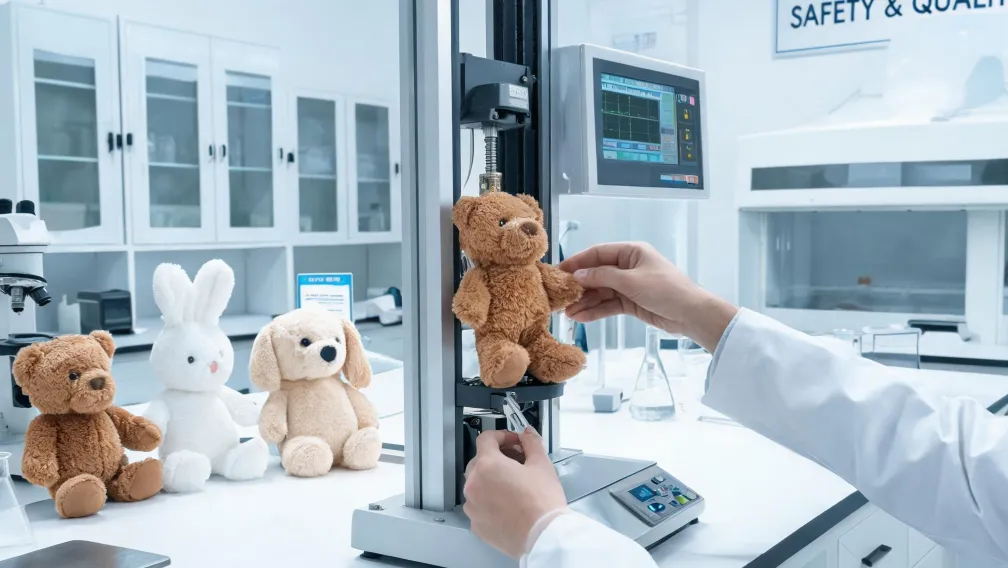
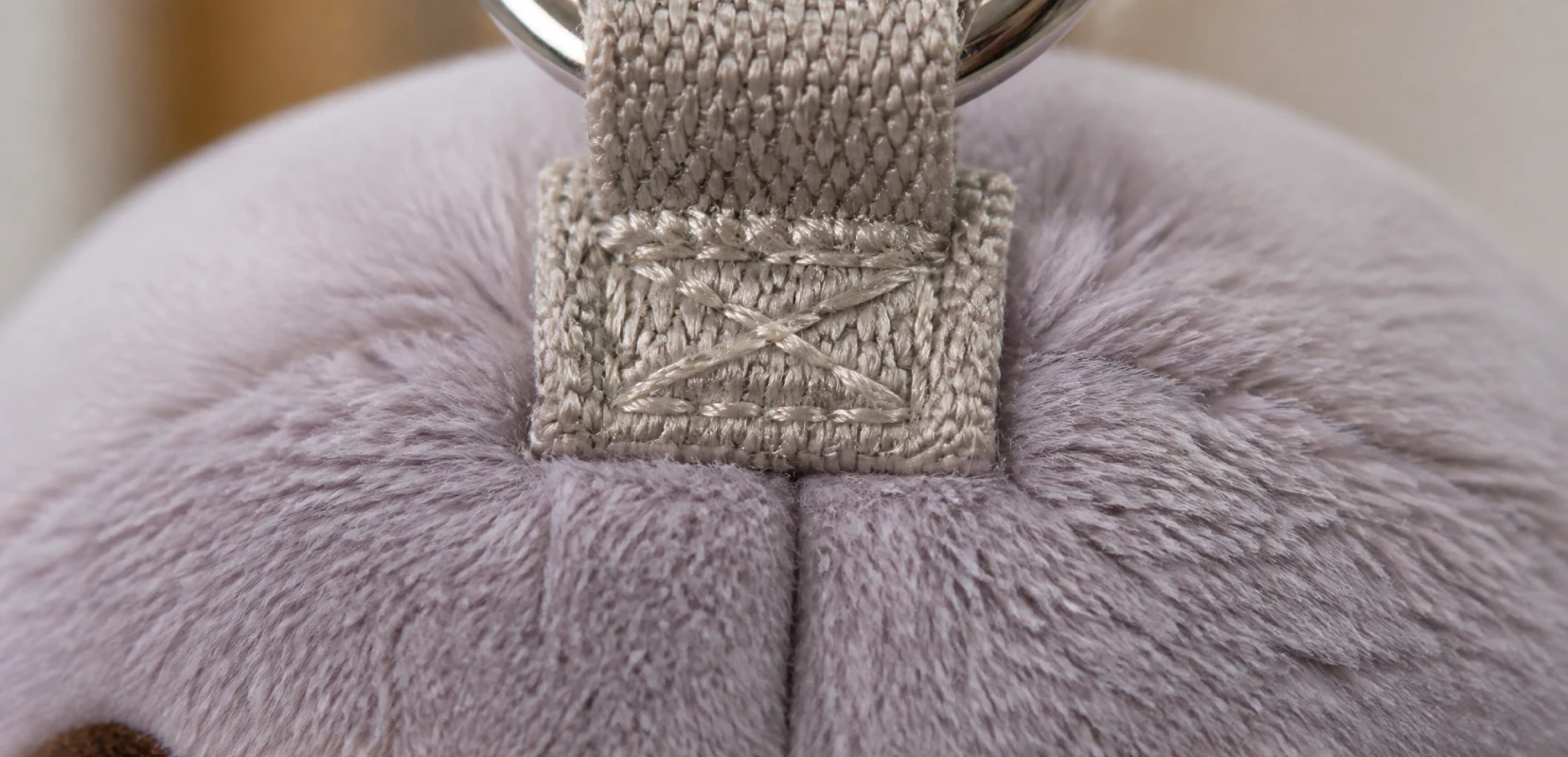
- Pull and cycle testing: attachments are pull-tested so the plush can't separate from the hardware, and clasps are rated for thousands of open-close cycles.
- Child-safe build: for young children we use embroidered eyes and nose instead of plastic parts, rounded smooth hardware, and securely sewn components.
- Market standards: testing to EN 71 (EU), ASTM F963 and CPSIA (US), with needle detection before shipment.
All testing runs through accredited labs such as SGS, Bureau Veritas, and Intertek, with reports issued per batch. Our plush toy safety standards guide explains each standard, and the safety and compliance page lists what we cover.
Packaging Options
Packaging is often what makes a keychain retail-ready. We produce OPP polybags for simple giveaways, printed header cards for hanging displays, gift boxes for premium lines, and blind-box packaging for collectible drops, where compact packing and a consistent batch appearance matter. Cards and boxes can carry your logo, colors, product information, barcodes, or a QR code, and custom packaging is available from the same MOQ as the keychain order.
MOQ, Cost, and Lead Time
Keychains have one of the lowest entry points of any plush product, which is part of why they work as a first SKU.
- MOQ: small keychains and pendants can start below the 300-500 pieces we quote for standard plush, with larger quantities lowering the per-unit price as pattern and setup costs spread out.
- Cost: pricing depends on size, fabric, embroidery colors, hardware grade, and quantity. A small embroidered keychain is one of the cheapest custom plush items to make; larger bag charms and premium hardware push it up. We give an itemized quote after seeing your design and volume, and our custom plush cost breakdown shows what drives the number.
- Lead time: a standard sample takes 7-10 business days after the design is confirmed, with up to three revision rounds, followed by bulk production. We confirm a written schedule before the order.
From Your Design to a Finished Keychain
A finished vector file or tech pack gives the fastest, most accurate first sample, but a reference image or a rough sketch is a fine starting point. Our team develops the artwork to production standard, confirms the direction with you, and then samples. Both OEM (your finished design) and ODM (we adapt a pattern) are supported. If you're preparing files, our guide on how to prepare artwork for plush production covers the views and specs that get an accurate sample.
Ready to turn a character or logo into a plush keychain your customers will actually keep? Browse our custom plush keychains for shapes and options, or contact us with your design and target quantity for a quote and a sample timeline.
FAQ
Plush keychains have a lower minimum than most custom plush. Small embroidered keychains and pendants can start below the 300-500 pieces we quote for standard plush toys, and some designs allow a small trial run before a full order. Larger quantities lower the unit price because pattern and setup costs spread across more pieces. We confirm a workable MOQ during quoting based on the size and complexity of your design.
A small embroidered plush keychain is one of the cheapest custom plush products to make. Price depends on size, fabric, number of embroidery colors, hardware grade, accessories, and order quantity. Bigger bag charms, full-color printing, and premium stainless-steel hardware raise the cost, while higher volumes bring it down. We provide an itemized quote after reviewing your design and target volume rather than a flat catalog price.
Most custom plush keychains are 6-15 cm. Around 8-12 cm is the common range for promo and retail because it balances detail, cost, and shipping. Below roughly 10 cm the sewing gets harder and fine detail is easier to lose, so very small keychains need high-density embroidery to keep logos and faces sharp. Larger 15-20 cm pieces are usually sold as bag charms.
It depends on use. A split ring is the most secure choice for anything that holds keys and is the standard default. A lobster clasp is better for bag charms and cases where the keychain is attached and removed often. Swivel snap hooks suit lanyards and larger charms, and a snap-tab strap wraps a bag handle. We match the hardware grade, usually zinc alloy or stainless steel, to your channel and budget.
Yes, when they are built and tested for it. For young children we use embroidered eyes and nose instead of plastic parts, rounded and smooth hardware, and securely sewn components, then test the finished keychain to your market's standard (EN 71 in the EU, ASTM F963 and CPSIA in the US). Hardware is also screened for lead and nickel and pull-tested so parts can't separate. Testing is done per design at an accredited lab.
They are the same basic product with a different focus. A plush keychain is usually smaller at 6-12 cm and fitted with a split ring or lobster clasp to hold keys or clip to a zipper. A plush bag charm is often larger at 12-20 cm and built for fashion display, frequently with a snap strap or swivel clasp that wraps a bag handle. The construction and safety requirements are the same; the size, hardware, and styling shift toward decoration.
Yes. A finished vector design or tech pack gives the fastest and most accurate first sample, but a reference photo or a rough sketch works too. Our design team develops the artwork to production standard and confirms it with you before sampling. We support both OEM (your finished design) and ODM (adapting an existing pattern), so most brands can start from whatever they have.