Custom Character Plush Manufacturing: A B2B Guide to Translating 2D IP into 3D Merchandise
Manufacturing a custom character plush involves a fundamentally different engineering standard than producing a standard stuffed animal. When an independent toy brand, animation studio, or game developer commissions merchandise based on an established intellectual property (IP), the margin for visual error is zero. Fans and collectors recognize the exact proportions, eye placement, and facial expressions of a character. A deviation of just a few millimeters in embroidery alignment can alter the character's recognizable identity, rendering the batch commercially unusable.
For B2B procurement teams, licensing directors, and IP owners, the transition from a 2D digital asset to a 3D physical textile product requires structured factory communication and specific manufacturing techniques. This guide details the industrial processes used to manufacture custom character plush and human dolls at scale. It outlines the pattern engineering requirements for 2D-to-3D translation, techniques for structural hair construction, facial embroidery precision, apparel integration, and the quality control metrics required to maintain IP accuracy across thousands of units.
The 2D to 3D Translation Process
How do manufacturers turn a 2D character into a 3D plush toy?
Manufacturers convert a 2D character into a 3D plush toy by drafting a multi-panel fabric pattern based on a character turnaround sheet (front, side, and back views). An in-house structural engineer maps the flat design onto a 3D volume, adjusting the placement of facial features to account for the curvature of the stuffed fabric. The factory then cuts the resulting fabric panels, embroiders the flat pieces, and sews them together into a prototype shell before injecting polyester stuffing to establish the final three-dimensional shape.
The success of this translation relies heavily on the reference material provided by the buyer. A standard tech pack for a character plush should include vector files of the character's face and specific Pantone color codes for the skin tone, hair, and apparel. Providing only a single front-facing illustration forces the factory pattern maker to guess the volume of the back of the head and the depth of the profile. This guesswork inevitably extends the prototyping phase and increases revision costs. Professional B2B workflows mandate a minimum of three viewing angles before pattern drafting begins.
Managing Proportions: Anatomical vs. Chibi (Q-Version) Formats
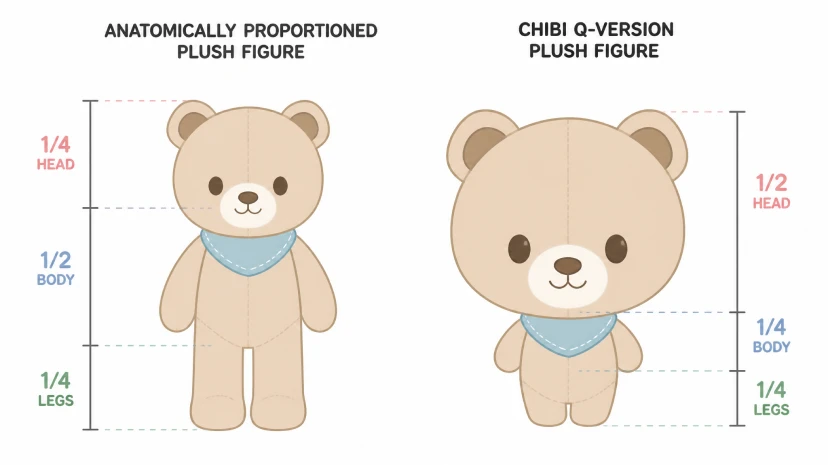
Humanoid characters rarely translate well into plush form if their strict anatomical proportions are maintained. Long, thin limbs made of fabric lack the internal rigidity to hold their shape, and a proportionally sized head provides too little surface area for detailed facial embroidery.
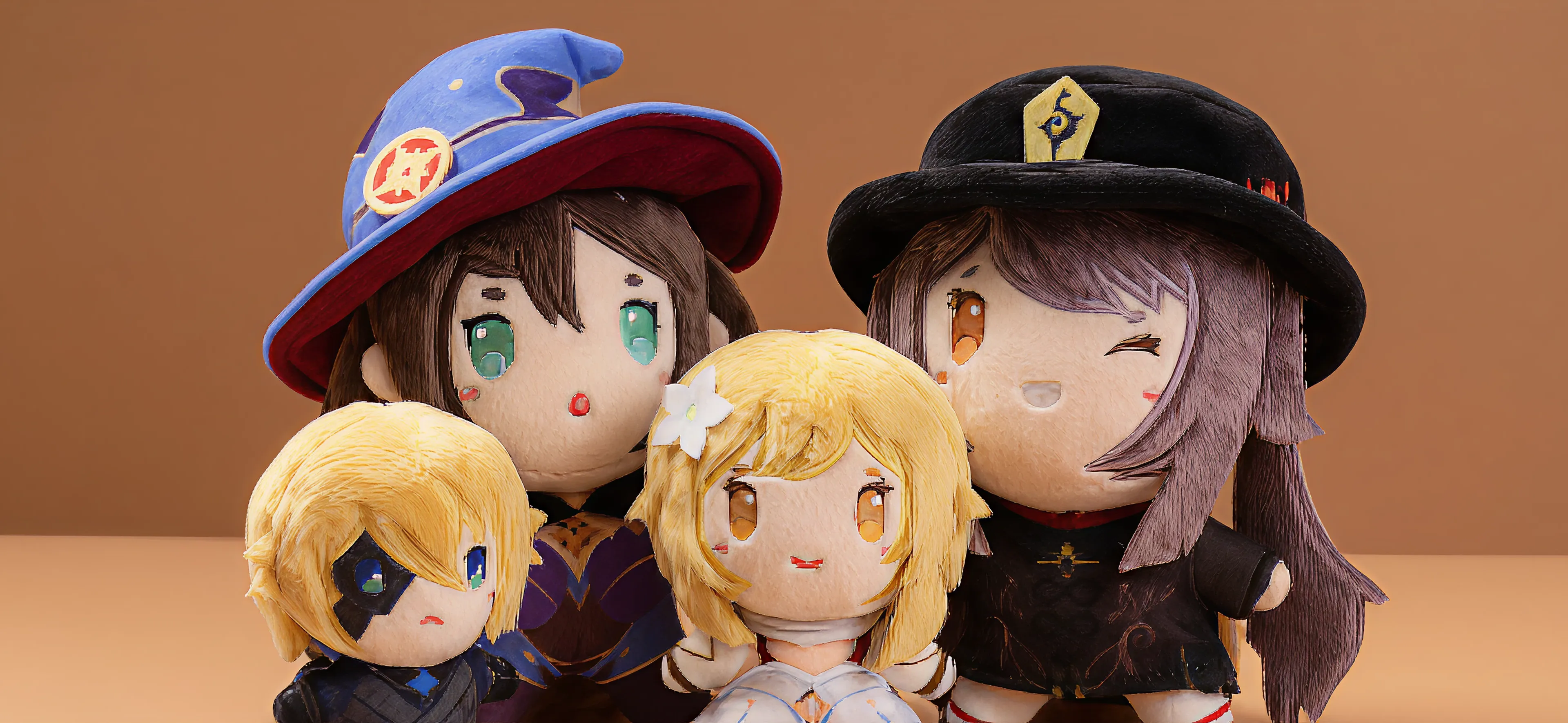
To solve this, factories and IP owners utilize deformed proportions, commonly referred to in the industry as "Chibi" or "Q-version" styling. This structural approach enlarges the head to comprise roughly 40 to 50 percent of the toy's total mass. The enlarged head creates a broad, relatively flat canvas for high-density facial embroidery, ensuring the character's expression remains readable. The limbs are shortened and thickened, providing structural stability and allowing the toy to sit upright independently. For standard commercial merchandise, the 20 cm (8-inch) sitting Q-version format is the most requested specification, balancing detailed execution with efficient container shipping volumes.
Facial Expressions and High-Density Embroidery
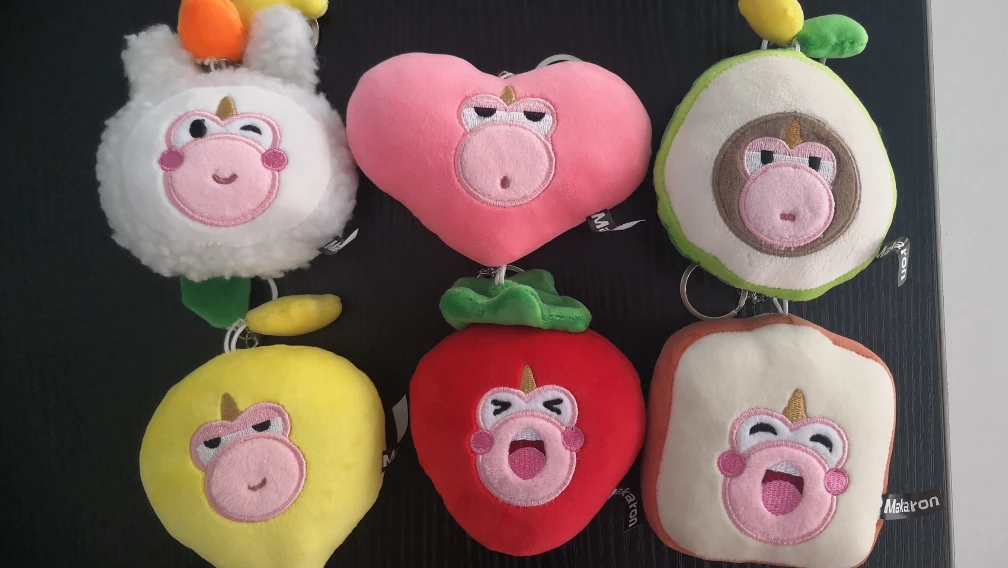
The face carries the character's identity. In modern commercial plush production, hard plastic eyes and noses have been almost entirely replaced by direct embroidery. Embroidery eliminates the safety risks associated with detachable plastic parts and provides exact color control over complex eye designs, such as anime-style eyes featuring multiple highlights and color gradients.
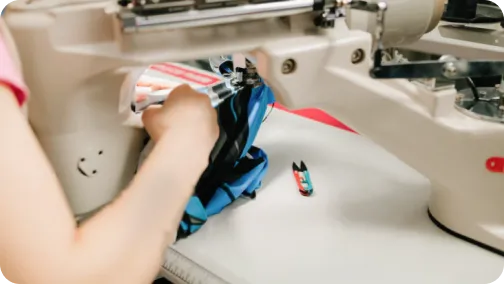
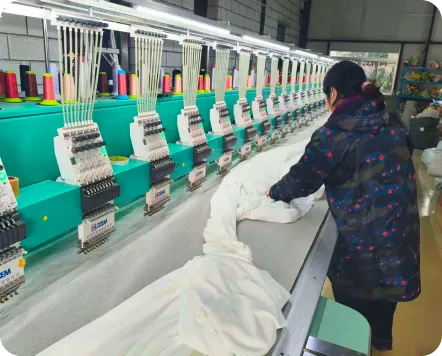
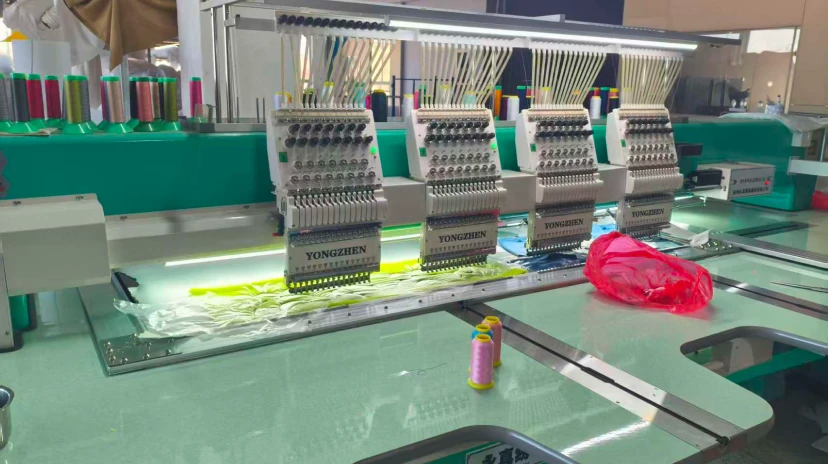
Achieving a premium result requires high-density embroidery. The factory digitizes the buyer's vector artwork into machine-readable files (such as .DST format), assigning specific thread counts and stitch directions to different areas of the face. High stitch density prevents the underlying base fabric from showing through the design. Furthermore, pattern engineers must pre-distort the embroidery files slightly. Because the fabric stretches when injected with PP cotton stuffing, perfectly circular eyes stitched on flat fabric will warp into ovals once the head is stuffed. Experienced manufacturers calculate this stretch ratio and narrow the embroidery file so the eyes expand into perfect circles during the final stuffing phase.
Hair Construction Techniques in Character Plush
Replicating human or anime hairstyles is the most technically complex aspect of character plush manufacturing. Unlike animal plush, which relies on an overall uniform pile, character hair requires distinct structural shapes, spikes, and layers. Factories employ three primary methods to engineer hair:
- Layered Felt or Fleece: Used for flat, graphic styles. Pieces of stiff felt or dense fleece are die-cut and layered over the base head. This method is highly durable and accurately replicates sharp, spiky anime hair, but it lacks a soft, huggable texture.
- Stuffed Plush Spikes: For premium 3D volume, pattern makers design individual cones or spikes made from the main Velboa fabric, stuff them lightly, and sew them into the seams of the head. This method provides excellent volume and a premium feel but increases manual sewing labor, raising the unit cost.
- Long-Pile Fur and Styling: For realistic or highly textured hair, long-pile synthetic fur (often 20mm to 40mm in length) is sewn into the scalp area. The factory workers then manually trim, style, and sometimes apply industrial adhesives to hold the parting lines in place. This technique is reserved for high-end collector items due to the extensive manual finishing required.
Apparel Engineering: Sewn-in vs. Removable Clothing
Clothing integration directly impacts the manufacturing budget and the play value of the item. Buyers must specify their apparel strategy during the initial quotation phase.
Sewn-In Clothing (Integrated Patterns)
For promotional items or budget-conscious retail lines, the clothing is engineered directly into the body pattern. The "shirt" is simply a different color of fabric used for the torso section, with printed or embroidered details added to simulate pockets, buttons, or collars. This approach minimizes fabric consumption and eliminates the secondary assembly line required to cut and sew miniature garments. It provides a clean, fixed appearance that withstands heavy handling.
Removable Miniature Apparel
Premium collector dolls and IP merchandise often feature fully removable outfits. This requires operating a secondary miniature garment production line within the factory. Standard heavy apparel fabrics (like denim or thick canvas) cannot be used at this scale, as they create unnatural bulk and restrict the plush toy's movement. Factories source specialized thin-gauge cottons, micro-fleeces, and miniature hardware (like 3mm snaps and micro-zippers) to construct the clothing. Complex logos or patterns on the clothing are typically applied using dye-sublimation printing, which embeds the ink directly into the textile fibers without adding thickness or a plastic texture.
Prototyping, Revisions, and the Golden Sample
The timeline for a custom character plush project is heavily weighted toward the front-end prototyping phase. A reputable manufacturer will require 7 to 14 business days to produce the first physical prototype from a 2D tech pack. The initial sample rarely achieves 100 percent likeness on the first pass; adjustments to jawlines, eye spacing, or hair volume are standard.
Buyers review detailed photos and videos of the prototype, issuing a consolidated list of revisions. Once the digital revisions are approved, the factory produces the final Pre-Production Sample (PPS) and ships it to the buyer for physical inspection. The buyer must physically handle the PPS to verify the fabric texture, stuffing firmness, and exact Pantone matches under standard lighting. Upon formal approval, this specific unit is tagged and held at the factory as the "Golden Sample." It becomes the absolute benchmark for the Quality Control (QC) team during mass production. The factory is contractually bound to match the bulk output strictly to the physical dimensions and details of the Golden Sample.
Scaling to Bulk Production and Quality Control
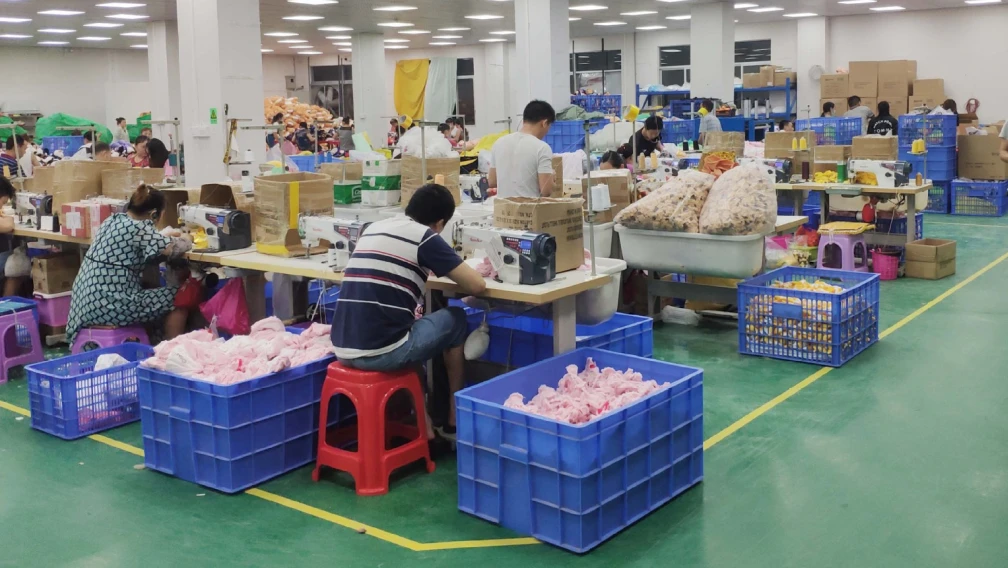
Maintaining IP consistency across an order of 5,000 or 50,000 units requires systemic process control. Professional plush factories replace manual fabric cutting with industrial laser cutting machinery. Laser cutting ensures that every fabric panel is dimensionally identical to a fraction of a millimeter and sears the edges of synthetic fabrics to prevent fraying during assembly.
During the sewing phase, in-line inspectors verify that operators are maintaining consistent seam allowances. A variance of just 2 millimeters in a seam allowance on a small character face will visibly distort the jawline. Automated air-pressure stuffing machines are calibrated to inject the exact weight of PP cotton required for the character, preventing the variance in firmness that occurs with manual hand-stuffing.
Safety Compliance for IP Merchandise
Even if marketed toward adult collectors, character plush toys often fall under general toy safety regulations due to their inherent appeal to children. B2B buyers must secure testing documentation from accredited third-party laboratories (such as SGS or Intertek) before distributing the merchandise.
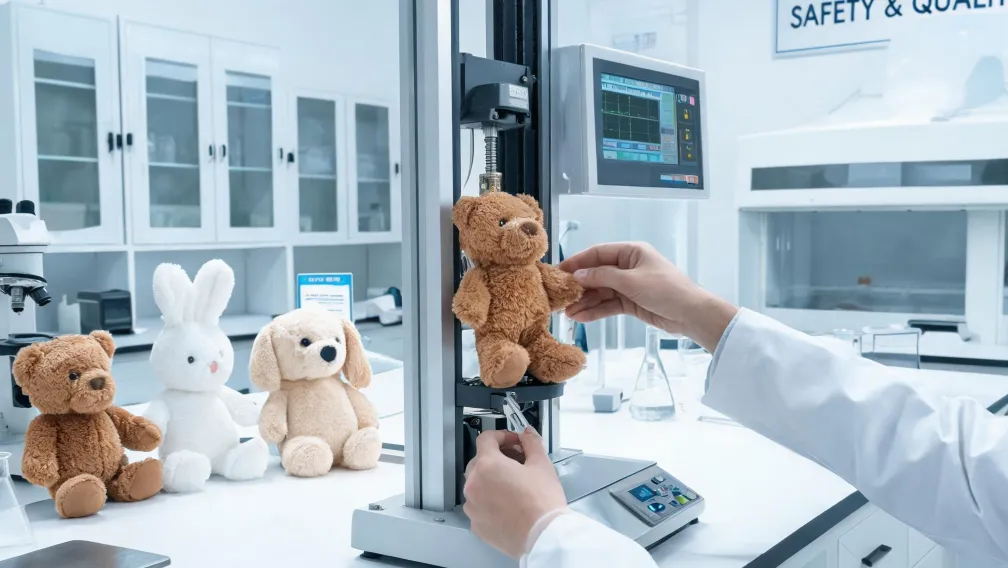
Key compliance points include chemical testing for heavy metals and restricted azo dyes in the fabrics, which is mandatory under the CPSIA (United States) and EN 71 (Europe) frameworks. Mechanically, the toys undergo tension testing, where specialized equipment pulls on the limbs, hair pieces, and clothing attachments at specific force levels to ensure they do not detach and create a choking hazard. Finally, every completed unit must pass through a calibrated metal detector before boxing to verify no broken sewing needles remain trapped inside the stuffing.
Sourcing Your Custom Character Plush
Executing a character plush program demands a manufacturing partner with dedicated pattern engineers, extensive embroidery capabilities, and strict quality control protocols. Factories that primarily produce generic animal shapes often struggle with the precise geometric requirements of human and anime designs. When requesting quotations, always ask to review the factory's past portfolio of character translations to verify their capability in capturing specific IP expressions.
To begin evaluating structures and materials for your IP merchandise, review our engineering parameters for custom character plush, or explore options for specialized humanoid designs in our custom plush dolls section. Submit your character turnarounds and tech packs to our production team to initiate a technical review and receive an itemized manufacturing timeline.
FAQ
For the most accurate translation, provide a vector-based character turnaround sheet showing the front, side, and back views. Include specific Pantone color codes for the skin, hair, and clothing. A detailed tech pack outlining desired fabrics, physical dimensions, and whether the clothing should be removable significantly speeds up the pattern engineering process.
Prototyping costs depend on the complexity of the character's hair structure, custom embroidery setup, and whether miniature removable clothing is required. The fee covers the structural engineer's time, custom fabric sourcing, embroidery digitization, and the physical sample production. Most factories refund this initial sample fee when you proceed to mass production and meet the required minimum order volume.
Yes. Custom character plush can feature fully removable clothing. This requires the factory to run a separate miniature garment production line using thin-gauge fabrics and specialized micro-hardware like 3mm snaps. Removable apparel increases the playability and premium feel of the product but adds to the overall unit cost compared to patterns with sewn-in clothing details.
Complex anime hairstyles are achieved through three main methods: layering die-cut stiff felt for flat, spiky looks; sewing and stuffing individual 3D plush cones for volumetric spikes; or attaching long-pile synthetic fur that is manually trimmed and styled on the production line. The method is chosen based on the character's specific design and your target unit cost.
The standard Minimum Order Quantity (MOQ) for custom character plush is typically 300 to 500 units per design. This volume is necessary to distribute the fixed costs associated with custom pattern engineering, machine embroidery setup, and bulk fabric dyeing. Complex dolls with extensive miniature apparel may occasionally require higher MOQs depending on material sourcing limits.
A standard mass production run for custom character plush takes approximately 35 to 45 days after the physical Pre-Production Sample (PPS) is formally approved. The prototyping phase leading up to that approval usually takes 2 to 4 weeks, depending on the number of revision rounds required. Always factor in an additional 3 to 5 weeks for international ocean freight.