Custom Weighted Plush Toys: A B2B Engineering and Manufacturing Guide
Weighted plush toys have moved from a niche sensory aid into a mainstream retail category. Driven by the adult collector market and a global consumer focus on emotional wellness and anxiety relief, demand for therapeutic plush designed for deep pressure stimulation is expanding rapidly. For B2B buyers, IP owners, and brand managers, executing a weighted plush program requires overcoming distinct manufacturing hurdles that do not apply to standard stuffed animals.
Adding one to three pounds of internal mass to a fabric shell changes the product's physics. The manufacturing process must account for severe seam stress, weight migration, consumer washability, and specialized safety compliance. A weighted toy that leaks beads fails regulatory standards and destroys brand trust immediately.
This guide details the industrial production standards for custom weighted plush. It covers the technical selection of weight materials, internal pouch containment systems, seam reinforcement protocols, outer fabric tensile requirements, compliance drop-testing, and the freight economics that determine unit profitability.
The Physics of Deep Pressure: Defining the Target Mass
Commercial weighted plush toys generally target a total mass between 1.5 pounds and 4 pounds (0.7 kg to 1.8 kg). Going below this range fails to provide the deep pressure touch (DPT) that consumers expect for therapeutic anxiety relief. Exceeding 4 pounds places excessive stress on standard textile seams and pushes international ocean freight costs into unsustainable territory for standard retail margins.
Buyers must define the exact target weight during the initial tech pack submission. The factory's structural engineer calculates the internal volume of the character and determines the exact ratio of standard PP cotton (for softness and surface volume) to dense weighted material (for mass). This calculated ratio ensures the final product feels like a soft, huggable companion rather than a rigid, overstuffed sandbag.
Selecting the Weighting Agent: Glass vs. Plastic Microbeads
Manufacturers rely on two primary materials to add mass to a plush toy. The selection impacts the toy's tactile feel, acoustic properties, and production cost. Professional manufacturers never use steel or metal ball bearings for weight, as these materials trigger factory needle detectors, rust during washing, and violate chemical safety standards.
Glass Microbeads
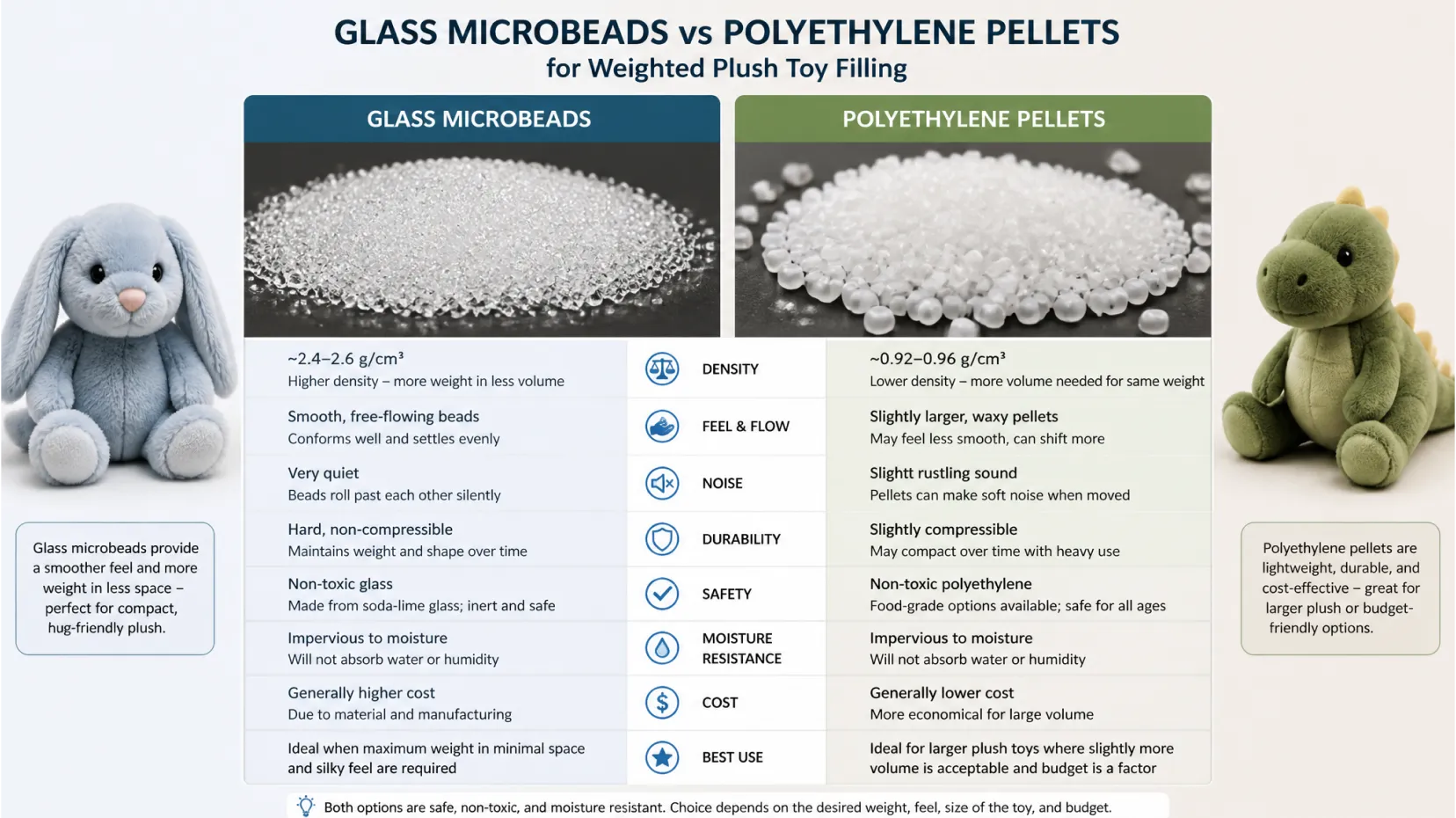
Glass microbeads are the premium standard for therapeutic plush. These beads are extremely small (typically 0.8mm to 1.2mm in diameter), perfectly smooth, and highly dense. Because of their high density, they require less physical volume to achieve the target weight, leaving more room inside the toy for soft PP cotton. Glass beads are completely silent when the toy is moved and retain a slightly cool temperature, adding to the calming sensory effect.
Polyethylene (PE) Pellets
PE pellets are small plastic beads (typically 2mm to 4mm in diameter) commonly used in traditional bean bags. PE pellets are cheaper than glass and highly durable, but they are significantly bulkier. Achieving a 3-pound target weight with PE pellets requires filling a large portion of the toy's internal cavity, which can make the product feel stiff. Additionally, PE pellets create an audible rustling sound during movement. They remain a cost-effective choice for budget retail lines or oversized floor plush.
Internal Containment Systems and Pouch Engineering
How are weighted plush toys safely manufactured to prevent leakage?
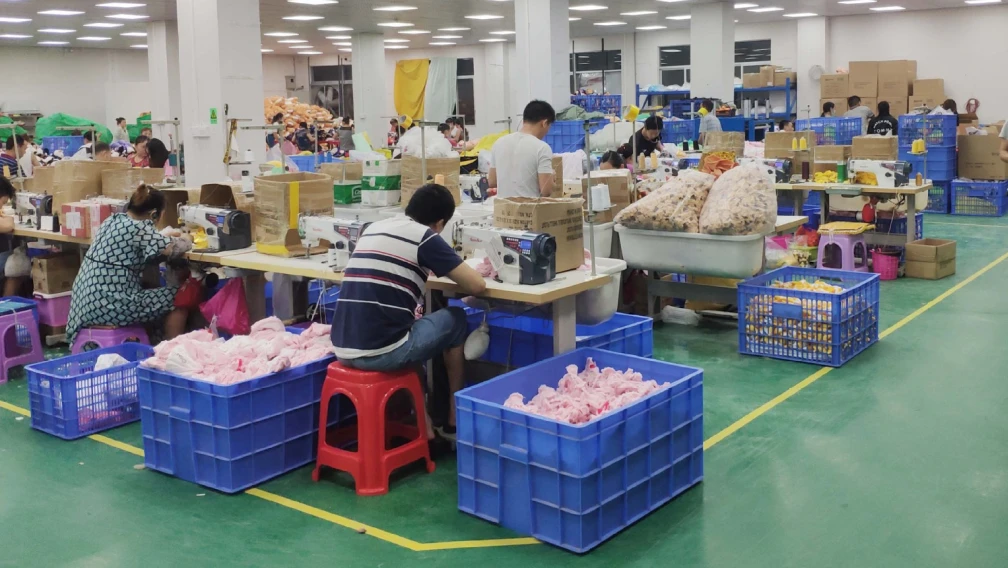
The weight material is never poured loosely into the outer fabric shell alongside the PP cotton. Factories encapsulate the glass or PE beads inside dedicated, high-density non-woven fabric pouches. These inner pouches are sealed using double overlock stitching or ultrasonic welding to prevent any microscopic leakage. The sealed pouches are then inserted into specific anatomical zones of the toy (such as the abdomen or the base) and surrounded completely by standard polyester fiberfill. This double-layer containment prevents the heavy, abrasive beads from rubbing directly against the outer seams, ensuring long-term structural integrity and compliance with child safety standards.
For premium brands, a double-pouched system is often employed. The glass beads are sealed in a primary inner bag, which is then sealed inside a second non-woven bag before insertion. This redundancy guarantees zero leakage even if the outer plush shell suffers a severe tear.
Weight Distribution and Ergonomic Mapping
A uniform distribution of weight often results in a poor user experience. The factory must map the weight to align with the toy's intended use case and physical posture.
For a "hug" companion, the mass is concentrated in the main torso pouch, placing the pressure directly on the user's chest. For a shoulder-resting therapeutic toy, the weight is distributed into the limbs or paws, allowing the toy to drape securely over the human body without sliding off. The pattern maker designs specific internal fabric baffles to lock the pouches in place. Baffling prevents the heavy beads from migrating to one side of the toy over time, maintaining the product's intended center of gravity.
Outer Fabric Selection and Seam Reinforcement
The internal mass acts as a battering ram against the fabric shell during transit, drop tests, and daily use. Standard lightweight fabrics will stretch, distort, and eventually tear under this constant kinetic load.
High-GSM Fabric and Backing
Weighted plush requires heavy-duty outer textiles. Buyers should specify fabrics with a density of 300 GSM or higher. Heavy Velboa, thick PV fleece, or dense Minky provide the tensile strength needed to hold the internal pouches without warping. In addition to high GSM, factories often apply a specialized woven backing layer to the fabric before cutting. This backing stabilizes the knit, eliminating lateral stretch so the toy doesn't sag under its own weight when held. Review heavy-duty fabric options on our materials page.
Industrial Seam Engineering
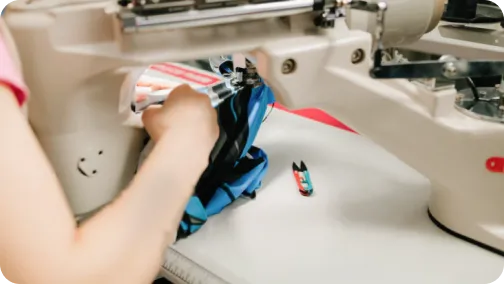
The factory must utilize high-tensile nylon thread and increase the stitches-per-inch (SPI) ratio. Standard plush toys use an SPI of 8 to 10; weighted toys often require 12 to 14 SPI. The closure seam—the final seam sewn by hand after stuffing—is particularly vulnerable. Professional factories execute a reinforced, hidden ladder stitch using double-threaded needles to secure this final closure point.
Safety Compliance and Drop Testing
Weighted plush toys face extreme scrutiny under international safety regulations like ASTM F963 (United States) and EN 71 (Europe).
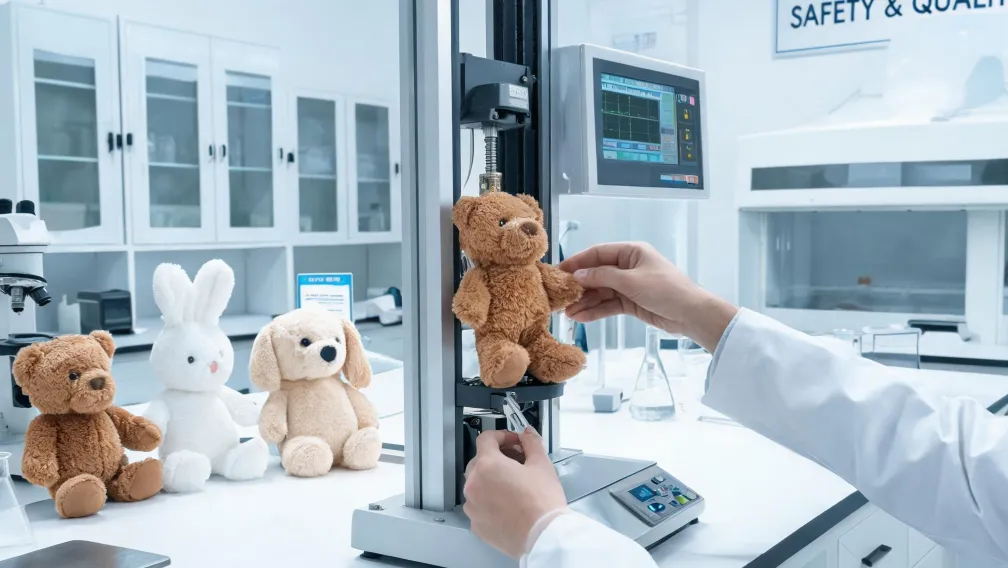
The primary regulatory hurdle is the mechanical drop test. A 3-pound toy dropped from a height of 3 feet exerts massive kinetic energy on its seams upon impact. If a seam ruptures and exposes the internal glass beads, the toy fails compliance immediately due to the introduction of small parts and choking hazards.
Buyers must mandate that the factory executes documented physical tension and drop testing on the final bulk production batch. Furthermore, the chemical composition of the PE pellets or glass beads must be lab-certified as free from heavy metals, lead, and phthalates. Partnering with a manufacturer familiar with these strict tolerances is explained in detail within our safety and compliance overview.
Logistics, Dimensional Weight, and Freight Economics
Weight drives the unit economics of this product category. Standard plush toys are governed by dimensional weight (volume); weighted plush toys are often billed by actual gross weight.
A standard 40-foot High Cube (40HQ) shipping container holds roughly 15,000 to 20,000 pounds of cargo safely depending on road limits. A production run of 10,000 weighted toys at 3 pounds each totals 30,000 pounds. This requires splitting the order across multiple containers to avoid exceeding highway weight limits upon arrival at the destination port. Buyers must calculate ocean freight costs using the actual product mass during the quoting phase rather than the standard volumetric estimates used for regular toys.
Air freight for bulk weighted plush is universally cost-prohibitive. Buyers must strictly manage their production timelines to allow for 30 to 45 days of ocean transit. While vacuum packaging is still utilized to reduce the physical volume of the shipment and fit boxes onto pallets efficiently, it does not alter the gross weight on the bill of lading.
Initiating Your Weighted Plush Production
Designing a therapeutic plush product requires a manufacturing partner capable of executing strict internal containment and heavy-duty seam engineering. Generic factories lack the specialized testing equipment and pouching workflows needed to produce heavy items safely at commercial scale.
Prepare your character designs and define your target weight metric to begin the quoting process. Review our manufacturing capabilities for weighted plush toys, and contact our engineering team to map out the internal structure, material requirements, and landed freight costs for your upcoming B2B program.
FAQ
The standard commercial range is 1.5 pounds to 4 pounds (0.7 kg to 1.8 kg). This provides noticeable deep pressure stimulation for anxiety relief without placing excessive stress on the fabric seams or making international ocean freight costs unmanageable.
Yes, provided they are engineered correctly. The weight material must be sealed inside internal non-woven pouches, and the outer seams must pass rigorous tension and drop tests under ASTM F963 and EN 71 standards to ensure beads cannot escape and pose a choking hazard.
Glass microbeads are the premium choice; they are dense, silent, and require less volume, allowing for more soft PP cotton inside the toy. Plastic PE pellets are cheaper and highly durable, but they are bulkier and produce a slight rustling sound when the toy moves.
Yes, if the toy utilizes high-quality internal pouches. Weighted plush with glass beads can generally be machine-washed on a cold, gentle cycle without an agitator. However, tumble drying is not recommended due to the heavy mass stressing the seams; air drying is standard industrial practice.
The unit cost is higher due to the raw materials (glass beads cost more than standard polyester fill), the extra manual labor required to sew and insert the internal containment pouches, and the mandatory use of heavy-duty nylon threads and high-GSM outer fabrics to support the extra mass safely.
Standard plush is billed by dimensional weight (volume), whereas weighted plush is billed by actual physical weight. A large bulk order of weighted toys is extremely heavy and will maximize the legal road weight limits of a standard shipping container long before filling the physical space, requiring careful container load planning.