Custom Weighted Plush Toys: A B2B Buyer's Guide to Fillings, Weight Specs, and Compliance
Custom weighted plush toys are stuffed soft toys engineered with internal weight chambers filled with glass microbeads or poly pellets, typically ranging from 1.5 to 12 pounds. Standard plush products are built only with polyester fiberfill, while weighted plush adds calibrated mass that delivers deep pressure stimulation, a tactile input associated with calming effects. This difference makes the category a fast-growing product line for sensory therapy brands, educational suppliers, and promotional buyers. For B2B procurement, weighted plush introduces engineering decisions that standard plush sourcing never touches: filling material selection, weight distribution across multiple chambers, seam reinforcement, and age-grading compliance. This guide covers the structural differences between weighted and standard plush, a filling material decision matrix, a weight specification framework based on occupational therapy guidelines, safety testing requirements, target market profiles, and the MOQ and lead time data needed to plan a production run.
How Weighted Plush Differs from Standard Plush Construction
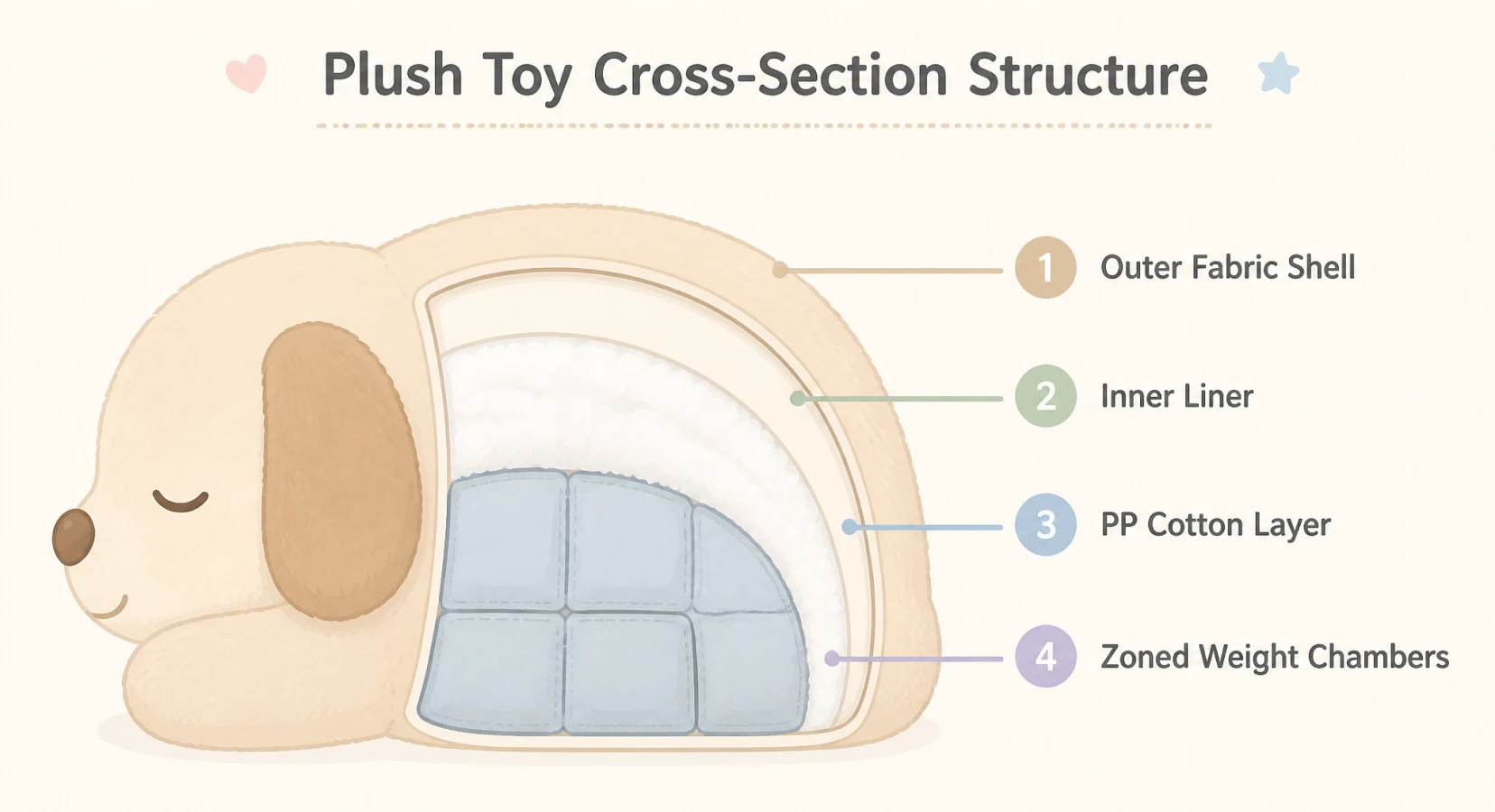
A standard plush toy consists of an outer fabric shell and a single cavity of polyester fiberfill. A weighted plush toy requires a four-layer structure, and each layer affects pattern design, labor time, and material cost.
- Outer fabric shell: The visible plush layer, typically short-pile velboa or minky. It carries embroidery and branding and must withstand higher surface tension than a standard shell because of the load beneath it.
- Inner liner: A secondary fabric envelope, usually cotton or non-woven material, that fully encloses the filling system. The liner creates a barrier between the weight chambers and the outer shell, so a seam failure on the shell does not expose filling.
- PP cotton layer: Polyester fiberfill wrapped around the weight chambers. It preserves the toy's soft hand feel, hides the outline of the inner pouches, and keeps the silhouette consistent across the batch.
- Zoned weight chambers: Individually sewn pouches containing glass microbeads or poly pellets. Chamber placement determines how the toy sits, drapes, and feels in the arms.
Center of Gravity Control
Concentrating weight low in the torso or base allows the toy to sit upright without support. This is a common retail requirement, since a weighted animal that slumps on a shelf loses perceived value. Pattern makers adjust chamber position during sampling until the toy holds its pose on a flat surface.
Multi-Zone Weighting: Belly and Limbs vs. Full Body
Two distribution approaches dominate commercial production. The first places 70 to 80 percent of the total weight in the belly chamber, with small pouches in the limbs and paws. This approach gives a natural floppy drape and keeps costs controlled. The second distributes weight across the full body in a grid of quilted chambers, similar to a weighted blanket. Full-body distribution suits lap pads and flat plush formats designed to rest across the legs or shoulders. The choice affects pouch count, sewing time, and unit price, so confirm it in the specification sheet before sampling.
Filling Materials: A Procurement Decision Matrix
Three filling systems cover nearly all commercial weighted plush production. The table below summarizes their procurement trade-offs. Options for the outer shell and fiberfill are detailed on the materials page.
| Attribute | Glass Microbeads | Poly Pellets | PP Cotton Blend |
|---|---|---|---|
| Relative density | About 2x poly pellets | Baseline | Very low |
| Cost per unit of weight | High | Low | Low |
| Noise when handled | Quiet; rounded beads slide silently | Audible friction rustle | Silent |
| Pouch volume required | Compact | Larger pouches for the same weight | Bulky; limited weight gain |
| Washability | Tolerates washing when sealed in liner | Tolerates washing when sealed in liner | Fully washable |
| Certification impact | Requires cleanliness and leakage testing | Requires cleanliness and leakage testing | Standard fiberfill testing only |
| Typical positioning | Mid-to-premium sensory and retail lines | Budget and promotional lines | Light weighting of base or limbs |
Glass microbeads are the standard choice for mid-range and premium weighted plush. Their density is roughly twice that of poly pellets, so a target weight is reached with about half the fill volume. The beads are round, quiet, and hypoallergenic. The trade-off is cost per kilogram, which is the highest of the three options.
Poly pellets (polypropylene or polyethylene granules) dominate budget and promotional programs. They cost less per unit of weight, but the same target weight requires a physically larger pouch, which changes the pattern and can stiffen the toy. Pellets also produce an audible rustle when the toy is handled, and some sensory buyers treat that noise as a negative.
PP cotton blends mix fiberfill with a small share of beads. This suits light-weighting projects, for example adding 200 to 400 grams to a base so a toy sits upright, without positioning the product as a weighted item.
Planning Weight Specifications for Your Product Line
The 5 to 10 Percent Body Weight Rule
Occupational therapy practice, adapted from weighted blanket guidance, recommends a total weight between 5 and 10 percent of the user's body weight. Plush toys concentrate their mass in a smaller contact area than a blanket, so experienced buyers specify toward the lower end of the range.
Standard Weight SKUs by End User
| End User | Reference Body Weight | Recommended Plush Weight | Common SKU Format |
|---|---|---|---|
| Children 3–5 years | 15–22 kg | 0.7–1.4 kg (1.5–3 lb) | Small weighted animal, 30–40 cm |
| Children 6–12 years | 22–45 kg | 1.4–2.3 kg (3–5 lb) | Medium weighted animal or lap pad |
| Teens and adults | 50+ kg | 3.6–5.4 kg (8–12 lb) | Large lap plush or shoulder format |
Writing Weight into the Specification Sheet
A production-ready spec states four data points: total target weight with a tolerance (plus or minus 5 percent is common), weight per chamber or zone, filling material and bead diameter, and pouch fabric. Vague instructions like "make it heavier" create sampling loops that can cost one to two weeks each.
Age Restrictions
Weighted plush is graded 3+. It is not recommended for children under 3 and must never be used for children under 2. The user must be able to remove the toy independently at all times. These restrictions belong on the product label and in your retail listing copy.
Safety Requirements Specific to Weighted Plush
Weighted plush carries every standard plush hazard plus one additional failure mode: bead leakage. Escaped microbeads or pellets present a choking risk for young children and have triggered product recalls in multiple markets. The checklist below reflects what third-party labs and retail compliance teams will examine.
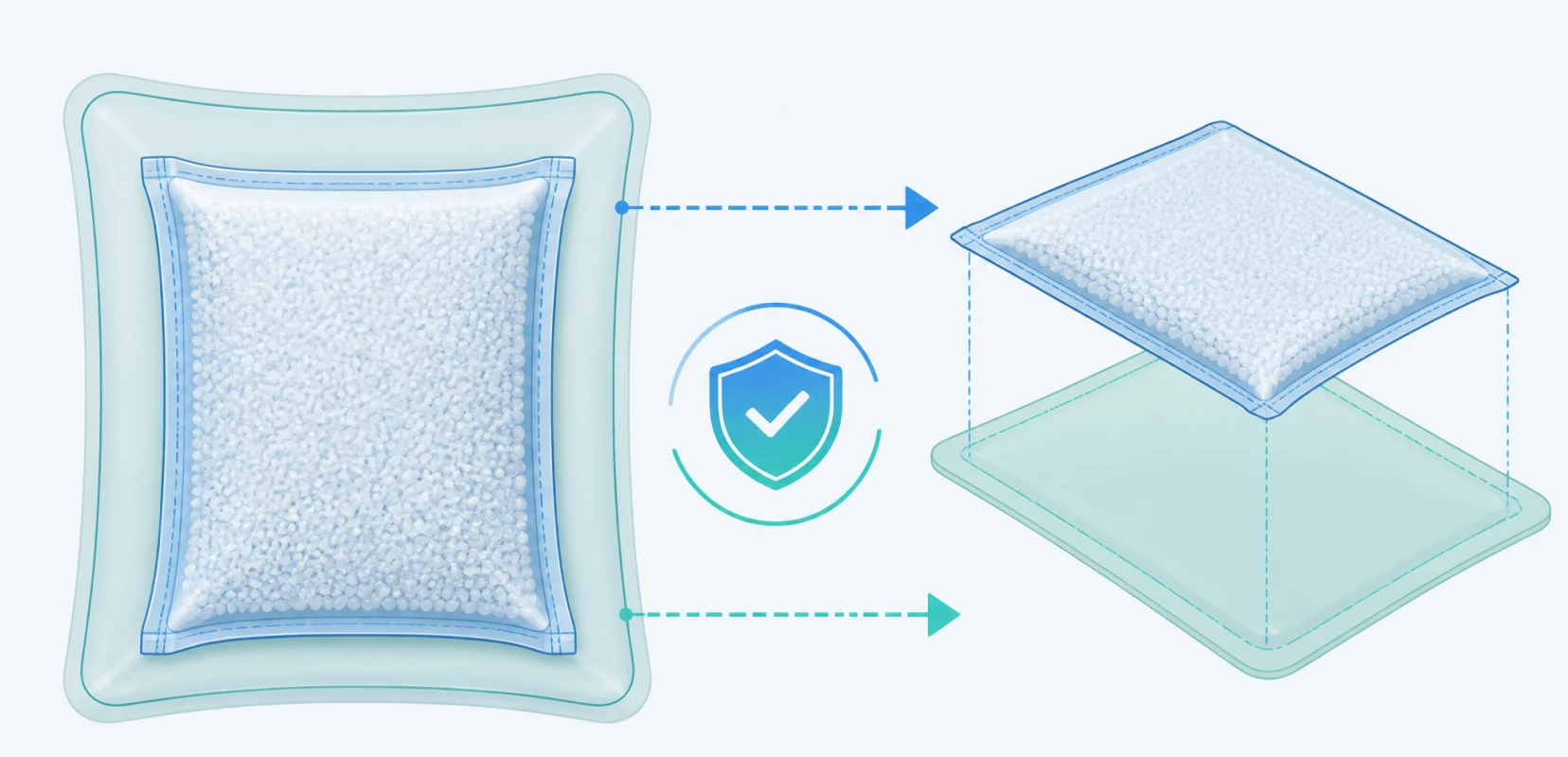
- Double-sealed bead pouches: Each weight chamber is sewn closed, then enclosed in the inner liner. Two independent containment layers must fail before beads can escape.
- Zoned quilting: Chambers are quilted into fixed zones so filling cannot migrate, clump, or load a single seam over time.
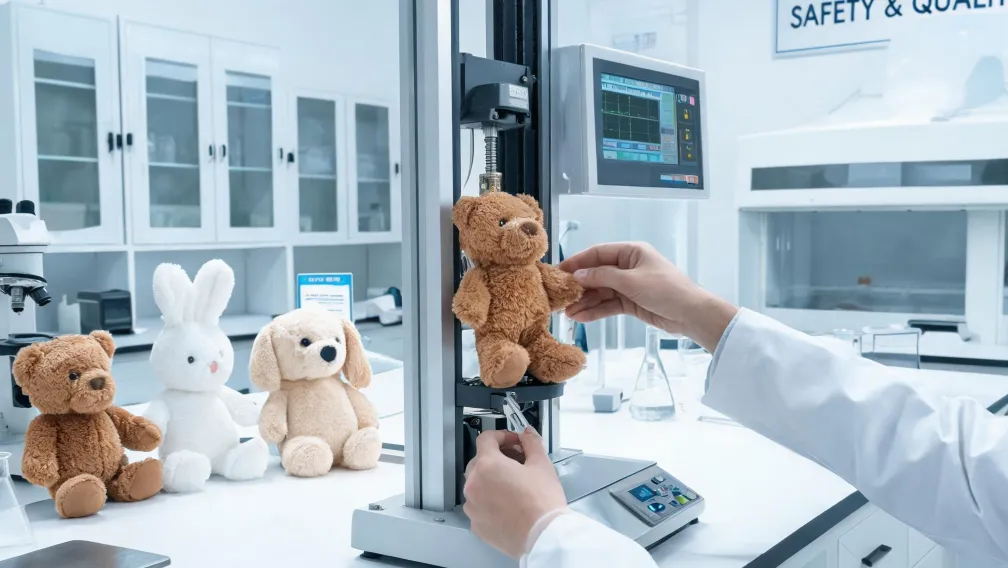
- Seam tension testing: Seams containing weight pouches are tested to 66.7 N under ASTM methods and 68.6 N under EN 71. Weighted seams carry continuous static load that standard plush seams never see.
- ASTM F963 (United States): Section 4.6 covers small objects and Section 4.5 covers stuffing cleanliness. The standard also requires tension testing, flammability compliance, and limits on heavy metals and phthalates. Toys intended for children under 12 require a Children's Product Certificate (CPC) based on third-party testing.
- EN 71 (Europe): Parts 1, 2, and 3 cover mechanical properties, flammability, and migration of certain elements. ASTM and EN 71 do not recognize each other's results. Selling into both the US and the EU means testing to both standards.
- Age grading and labeling: Weighted plush carries a 3+ label. Designs with removable inserts must pass small-parts assessment on the closure system, such as zippers or hook-and-loop fasteners.
A full breakdown of testing workflows is available on the safety and compliance page and in the plush toy safety standards guide.
Target Markets and Channel Requirements
Sensory Therapy and Autism Support
According to a 2025 CDC report, about 1 in 31 eight-year-old children in the United States was identified with autism spectrum disorder. This population drives steady institutional and retail demand for sensory products. Brands in this channel request glass microbeads for quiet handling, soft minky or velboa shells, removable washable covers, and documented CPC or EN 71 test reports. Weight SKUs from 1.5 to 5 lb account for the largest volumes.
Education and Institutional Channels
Schools, therapy centers, and libraries buy weighted lap animals for classroom calm-down corners. The dominant requirement is hygiene: removable weighted inserts with machine-washable outer covers, because one unit is handled by many children. Durability test data and spare cover availability appear frequently as line items in institutional tenders.
Retail Gift, Promotional, and IP Licensing
Retail and licensed-character programs use light weighting, typically a weighted base or paws, to improve shelf presence and hand feel at a controlled cost. Promotional buyers prioritize price and usually specify poly pellets. For licensed IP, chamber placement must follow the licensor's approved silhouette. Related program formats are covered on the promotional plush toys page.
Market Data and Demand Outlook
Two data series frame the category's trajectory. Business Research Insights values the sensory toys market at approximately USD 2.46 billion in 2026, projecting growth to USD 6.16 billion by 2035 at a compound annual growth rate of about 11 percent. Market Growth Reports estimates the weighted blanket market, the closest adult analogue, at roughly USD 898 million in 2024 with a projected CAGR of 14.1 percent.
For procurement planning, the implication is direct: weighted and sensory plush is moving from a niche therapy product into a standard retail category. Buyers who lock in tested constructions, defined weight SKUs, and compliance documentation now will be positioned to expand their lines as retailer demand grows.
Designing for Washability
Washability depends on the internal pouch architecture, a detail often missed in first-generation specs. Sealed glass microbeads and poly pellets tolerate water, but repeated machine cycles stress pouch seams. The strongest commercial solution is a removable weighted insert: the bead chambers sit in a zippered inner pouch, and the outer plush cover goes through machine washing on its own. Fixed-fill designs are limited to spot cleaning or gentle hand washing. State the intended care method in the spec, since it determines pouch fabric, closure hardware, and the testing protocol.
MOQ, Sampling, and Production Lead Times
Standard minimum order quantities for custom weighted plush run 300 to 500 pieces per design. Sampling takes 7 to 15 days. Weighted designs often use the full window because bead fill weight must be calibrated and the toy's sitting balance verified. After sample approval, bulk production takes 25 to 35 days depending on order volume and chamber complexity. Weighted products are denser cargo than standard plush, so freight cost per unit runs higher, and container weight limits should be checked during quotation.
Start Your Custom Weighted Plush Project
A production-ready inquiry includes target weight and tolerance, filling material preference, chamber layout, end-user age group, and destination market. With those five data points, a factory can return an accurate quote and sampling timeline within days. Review current product formats on the weighted plush toys page, or contact our team to request a weighted sample and an itemized quotation for your program.
FAQ
Commercial production uses three systems: glass microbeads, poly pellets, and PP cotton blends. Glass microbeads offer roughly twice the density of poly pellets, are quiet and hypoallergenic, and serve as the standard for mid-to-premium sensory lines. Poly pellets cost less per unit of weight but require larger pouches and produce audible friction noise. PP cotton blends suit light weighting, such as stabilizing a toy's base.
Occupational therapy guidance, adapted from weighted blankets, recommends 5 to 10 percent of the user's body weight. Because plush concentrates mass in a smaller contact area, specify toward the lower end of the range. Typical commercial SKUs are 1.5 to 3 lb for ages 3 to 5, 3 to 5 lb for ages 6 to 12, and 8 to 12 lb for teens and adults.
For the United States, ASTM F963 covers small parts (Section 4.6), stuffing cleanliness (Section 4.5), tension testing, flammability, and limits on heavy metals and phthalates; toys for children under 12 require a Children's Product Certificate (CPC). For Europe, EN 71 Parts 1, 2, and 3 apply. The two standards do not recognize each other's results, so dual-market products need both test programs. Seams on weight chambers are tested to 66.7 N under ASTM methods and 68.6 N under EN 71.
Weighted plush is graded 3+ and is not recommended for children under 3; it must never be used for children under 2. The user must always be able to remove the toy independently. Any bead leakage presents a choking hazard, which is why double-sealed chambers enclosed in an inner liner are mandatory in production.
It depends on the internal structure. The preferred design uses a removable weighted insert with a zippered closure, so the outer plush cover can be machine washed separately. Fixed-fill designs with sealed bead pouches tolerate gentle washing, but repeated machine cycles stress pouch seams, so spot cleaning is the safer recommendation for those products.
Standard minimum order quantities run 300 to 500 pieces per design. Sampling requires 7 to 15 days, including weight calibration, and bulk production takes 25 to 35 days after sample approval. Weighted cargo is heavier per unit than standard plush, so confirm freight weight limits when requesting a quotation.
The main channels are sensory therapy and autism support brands, education and institutional buyers, and retail gift, promotional, and IP-licensing programs. Business Research Insights values the sensory toys market at about USD 2.46 billion in 2026, projecting growth to USD 6.16 billion by 2035 at roughly 11 percent CAGR, so buyer demand is expanding across all three channels.